Best Solar Electric Fence Energizers for Livestock and Gardens
Answer: For reliable, low-maintenance animal control, choose solar-powered fence energizers that match your livestock size, grazing area, and weather conditions. This guide highlights five top options and explains who each is best for, plus a concise buying table to compare key points at a glance.
| Product | Best For |
|---|---|
| 24-Hour Solar Electric Fence Charger, 0.18J, 10-Mile for Livestock | Small-to-medium livestock enclosures; off-grid yards |
| 10 Miles Solar Powered Electric Fence Charger, 0.18J | Portable setups; gardens, coops, and flexible boundaries |
| Electric Fence Charger, 6.7J, 10.2kV | Large properties and wider pasture boundaries |
| 3.5 Miles Electric Fence Charger, 2J | Garden boundaries and small-to-medium plots |
| Gallagher S6 Solar Electric Fence Charger | Backyard gardens and small livestock enclosures |
24-Hour Solar Electric Fence Charger, 0.18J, 10-Mile

This all-in-one solar energizer provides a 0.18 Joule pulse and up to 10 miles of fence coverage, suitable for small to medium livestock blocks. It stores energy during daylight for overnight operation, ensuring continuous performance. Best for property owners seeking a self-contained solar option with predator deterrence capability. The kit’s ground rod setup requires precise placement to maximize grounding effectiveness.
Who it’s best for: rural homesteads or small farms with goats, poultry, or cattle needing day-and-night protection without daily charging. Limitation: performance depends on soil conditions and proper rod placement; dry or rocky soil may require additional grounding rods.
10 Miles Solar Powered Electric Fence Charger, 0.18J
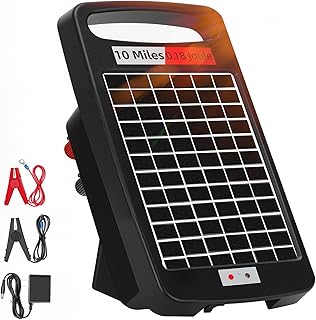
This portable solar-powered energizer delivers continuous 24/7 protection with a larger solar panel and all-in-one design. It’s ideal for flexible, moveable boundaries around gardens, chicken coops, and poultry netting. Best for people who need a go-anywhere solution that works day or night without external power. Caution: ensure the included solar setup is oriented to maximize sun exposure for optimal charging.
Electric Fence Charger, 6.7 Joule, 10.2kV
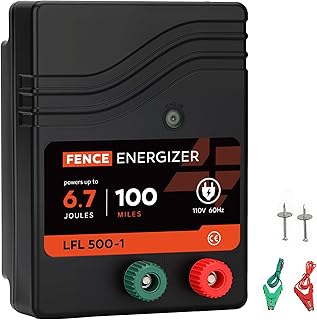
This AC-powered energizer claims high output suitable for up to 100 miles of fencing, making it a fit for large properties or estates needing substantial containment. Best for long-range fencing when power access is available; its high voltage is designed for robust deterrence. Limitation: requires a 110V power supply and a reliable grounding strategy for best performance.
3.5 Miles Electric Fence Charger, 2J

This compact kit offers 2 Joules and 3.5 miles of coverage, making it a practical choice for gardens, small pastures, or yard enclosures. It ships with a warning sign and conductors for quick setup. Best for small-scale applications where a ready-to-use kit simplifies installation. Caution: manual notes indoor use for longevity; outdoor use is supported but ensure weatherproofing and protection from moisture.
Gallagher S6 Solar Electric Fence Charger

This compact solar energizer is designed for garden plots, chicken coops, and small animal enclosures. It uses a lithium battery and mounts on a grounding rod, reducing setup complexity for small farms or homestead yards. Best for low-maintenance, solar-powered containment. Limitation: mounting options are rod-based and may require specific installation conditions for peak performance.
Buying Guide
What should you consider when choosing a solar fence energizer?
- Fence length and livestock type: Higher joule ratings and longer range are needed for larger herds or longer fences. For small gardens, 2–3 Joules can suffice.
- Power source and reliability: Solar panels reduce maintenance but depend on sunlight. AC-powered units offer steadier performance where power is available.
- Grounding and installation: Proper grounding is critical for effective pulses. Plan rod placement, soil condition, and weather exposure before setup.
- Portability vs. fixed installation: Portable units suit movable pastures and seasonal setups; fixed units suit permanent boundaries.
- Weatherproofing and durability: Look for weatherproof housings and robust construction for outdoor use in varied climates.
How to compare models quickly?
- Coverage vs. joule rating: More Joules generally support longer fences; confirm the miles of coverage stated by the manufacturer.
- Battery type and life: Lithium batteries offer longer life and better performance in cold weather, but check charging cycles and replacement needs.
- Ease of setup: Kits with all-in-one components and wiring simplify installation for beginners.
FAQ
- Q: Do solar fence energizers work year-round? A: Yes, if the solar panel and battery are adequately sized for your climate and daylight hours.
- Q: How many ground rods are needed? A: Typically multiple rods improve grounding; follow manufacturer guidelines and soil conditions.
- Q: Can I use any wire with these energizers? A: Use conductors recommended by the product to ensure proper voltage and safety.
- Q: Is it necessary to disable the system during rain? A: No, weatherproof models are designed for outdoor use; ensure grounding is correct for rainy conditions.
- Q: How do I know if the fence is energizing? A: Look for indicators on the energizer and test with a capacitance or fence tester as recommended by the manual.
- Q: Can these energizers deter predators? A: Many models offer deterrence by delivering a visible or audible response when animals contact the fence.