Best 12 Volt Windmill Generator Kits for Home Power
Find the right 12-volt windmill generator for off-grid living, RVs, boats, or small home setups. This guide compares five reliable kits, highlighting who benefits most from each option and how they perform in real-world conditions. Each product is evaluated for durability, startup wind speed, efficiency, and ease of use to help you choose based on your location and energy needs.
| Product | Brand | Nominal Power (W) | Best For |
|---|---|---|---|
| Wind Turbine Generator Kit, 1200W 5 Blade Wind Generators | pofluany | 1200 | High-energy needs in windy residential setups |
| 3000W Wind Turbine Generator Kit, 12V/24V Vertical Axis | Generic | 3000 | Large off-grid cabins or boats with strong winds |
| VEVOR 800W Wind Turbine Generator | VEVOR | 800 | Balanced home or farm use with MPPT control |
| 400W 12V Wind Turbine Generator Kit, Vertical Axis | Pazcii | 400 | Compact spaces and lower wind regions |
| VEVOR 500W Wind Turbine Generator | VEVOR | 500 | RVs, boats, and small off-grid needs |
Wind Turbine Generator Kit, 1200W by Pofluany

The 1200W kit uses a three-phase permanent magnet synchronous motor with a compact AC generator and NdFeB magnets. It includes a fully integrated voltage regulator that automatically shuts down when the battery is full. Best for: homeowners with moderate to high energy demand in windy conditions. Caution: ensure proper yaw alignment to capture maximum wind energy and verify compatibility with your battery setup.
3000W Wind Turbine Generator Kit, 12V/24V Vertical Axis
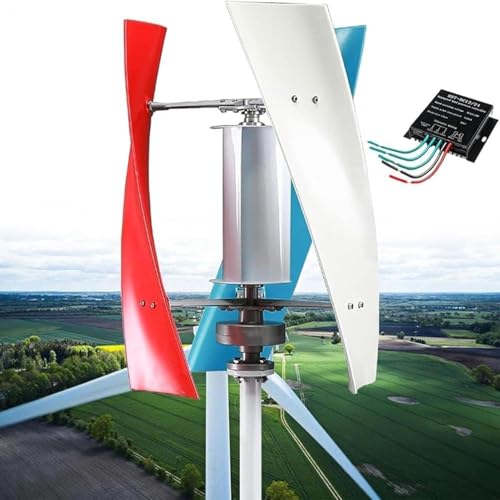
This vertical-axis turbine uses a three-phase PMG and aerodynamic blades for low start wind speeds and high wind resistance. It is designed for long-term durability with a service life projected at 10–20 years and features automatic wind regulation. Best for: larger off-grid applications or boats where wind is steady and strong. Caution: tower and mounting hardware are not included, and installation may require professional support.
VEVOR 800W Wind Turbine Generator

The 800W kit features a 12V three-phase AC PMG and an MPPT controller, optimizing current and voltage for variety of circuits. It starts at around 2.5 m/s and performs well up to 12 m/s rated winds. Best for: homes, farms, RVs, or boats seeking quiet operation and efficient energy capture. Caution: tower pole not included, so structural planning is needed for installation.
400W 12V Wind Turbine Kit, Pazcii

The Pazcii kit uses three blades on a vertical axis and a coreless PMG. It features a low wind start and aerodynamic blades designed to minimize noise and vibration. Best for: compact spaces or low-wind regions where modest power is acceptable. Caution: higher winds may require additional vibration damping and secure mounting.
LKSNBDR Vertical Wind Turbine Model

This 12V, 3-phase permanent magnet generator uses a robust PVC-aluminum-PP construction to resist UV, water, and dust. It has a low wind startup around 9.84 ft/s and emphasizes a simplified drive with integrated main body and shaft. Best for: outdoor installations needing durable, low-maintenance operation. Caution: ensure adequate wind exposure since performance depends on blade exposure to wind.
Pikasola 400W Wind Turbine Kit

Includes a horizontal-axis wind turbine with nylon carbon fiber blades and a three-phase PMG generator with integrated regulator and MPPT control. Best for: hybrid solar-wind setups, boats, or cabins needing steady power with space constraints. Caution: ensure battery charging system compatibility with MPPT controller.
Buying Guide: Key Purchase Considerations
- Wind speed requirements: Check start-up wind speed and rated wind speed to ensure the turbine matches your typical wind profile.
- Voltage and output: Confirm your battery bank is compatible (12V systems are common) and whether an MPPT controller is included for efficient charging.
- Durability and weather resistance: Look for corrosion resistance, UV stability, and waterproofing for outdoor installations.
- Mounting and zoning: Verify tower height, mounting hardware, and any local regulations or permits needed for rooftop or ground installations.
- Noise and vibration: Consider blade design and bearing quality if you need quiet operation around living spaces.
Frequently Asked Questions
- What is the typical wind speed needed to start generating power? Most kits start around 2.5 m/s to 3 m/s depending on design.
- Do these kits include mounting hardware? Some kits exclude towers; verify before purchasing.
- What maintenance is required? Routine checks of blades, bearings, and electrical connections help maintain performance.
- Can I connect multiple turbines to one battery bank? Yes, but ensure proper load sharing and battery management to avoid overcharging.
- Is a controller necessary? A controller (especially MPPT) improves charging efficiency and protects batteries.