Best Cheap Solar Panel System Options for Off-Grid Power
Looking for a cost-effective solar setup that boosts off-grid reliability without breaking the bank? This guide highlights five affordable, feature-rich solar panel kits well-suited for RVs, cabins, boats, and basic home back-up. These picks emphasize value, ease of installation, and scalable options for budget-conscious buyers. The top picks range from compact starter kits to larger expandable systems, each with practical strengths for different off-grid needs.
Below is a quick, at-a-glance buying table to compare the five selected products. It helps identify who each kit is best for and the main benefit it brings to cost-conscious buyers.
| Product | Best For | Why It’s Worth It |
|---|---|---|
| ECO-WORTHY 200 Watt 12V Complete Solar Panel Starter Kit | RV trips and small off-grid setups | All-in-one starter kit with panels, battery, inverter, and controller for simple, budget-friendly deployment. |
| ECO-WORTHY 10KW Complete Off-Grid Solar System Kit for Home | Home backup and larger off-grid needs | Higher capacity with 10kW inverter and 2 x 48V batteries for scalable whole-home backup. |
| ECO-WORTHY 7.168KWH 800W Solar Panel Kit for RV | RV life with solid daily energy | Balanced RV-ready kit with 800W solar panels and a robust inverter/UPS for mobile power. |
| ECO-WORTHY 200 Watt 12V Solar Panel Kit | Compact RV or cabin back-up | High-efficiency monocrystalline panels and durable frame at a budget-friendly price. |
| Renogy 200 Watt 12V Starter Kit | Reliable RV or off-grid starter | Solid starter kit with a 200W panel pair and PWM charge controller for steady performance. |
ECO-WORTHY 200 Watts 12 Volt/24 Volt Solar Panel Kit
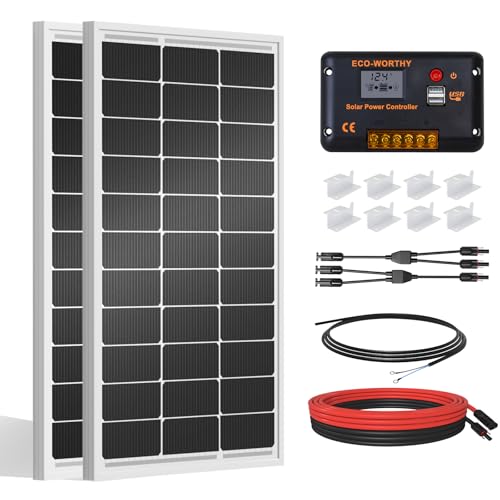
This starter kit targets budget-conscious RVers and small off-grid setups. It combines a high-efficiency monocrystalline panel with a 30A PWM controller, designed for 12V or 24V systems. Best for buyers who want a simple, all-in-one solution without extra purchases. A limitation is the PWM controller, which is less efficient than MPPT in variable sun conditions.
ECO-WORTHY 10KW Complete Off-Grid Solar System Kit for Home

Designed for homeowners seeking significant backup power, this kit delivers up to 10kW continuous output with a 48V battery bank and a 10kW inverter. It’s suitable for running essential home appliances and can be expanded to support more units in parallel. The system includes integrated energy monitoring. A caution: higher upfront cost and installation complexity compared to smaller kits.
ECO-WORTHY 7.168KWH 800W Solar Panel Kit for RV

Best for RV travelers needing robust energy without sacrificing portability. The kit includes four 200W panels and a 3,000W UPS inverter charger, plus two 12.8V 280Ah lithium batteries. It’s a solid middle-ground option that balances energy capacity and mobility. A limitation: larger footprint than ultra-compact setups and may require vehicle-specific mounting adaptations.
ECO-WORTHY 200 Watt 12V Complete Solar Starter Kit
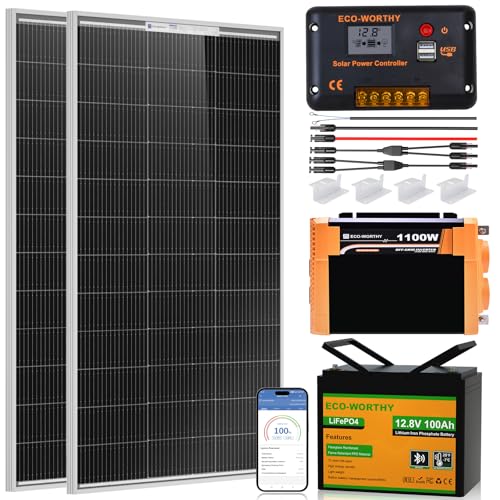
This is another compact 200W starter option, focusing on RV trips and small off-grid needs. It includes two 100W panels, a 12.8V 100Ah lithium battery, an 1100W inverter, and a 30A PWM controller. It’s best for buyers wanting a ready-to-go kit with essential components and straightforward setup. Caution: 100Ah battery capacity may limit runtime for higher-energy loads.
Renogy 200 Watt 12 Volt Starter Kit

Renogy’s 200W starter kit is a reliable entry point for off-grid setups. The dual 100W panels deliver ample daily energy for RVs or small cabins. It uses a PWM charge controller and efficient panel construction to sustain reliable charging in varied conditions. Best for buyers who prefer a known brand with straightforward expandability. Limitation: PWM controllers are generally less efficient than MPPT under variable sunlight.
Buying Guide
What should I look for in a cheap solar panel system?
- System size: Match daily energy needs to panel output and battery storage. Start small and scale up as needed.
- Controller type: PWM is budget-friendly; MPPT is more efficient in variable sun but costs more.
- Battery compatibility: Determine if the kit uses lead-acid or lithium batteries and their usable capacity.
- Expandability: Check if the system allows adding more panels or batteries later without a full redesign.
- Durability: Look for corrosion-resistant frames and IP ratings for weather exposure.
How to compare kits quickly?
- Daily energy (Wh or kWh) vs. stored energy (Wh or kWh) to estimate usable power.
- Inverter rating vs. peak load needs for appliances or devices you plan to run.
- Mounting and space requirements for panels and batteries, especially in RV or cabin installations.
What installation considerations matter?
- Wiring length and gauge affect efficiency; plan cable runs to minimize losses.
- Ventilation for lithium storage and inverter heat dissipation.
- Regulatory compliance and safety standards for home or vehicle installations.
Maintenance tips for budget systems
- Keep panels clean to maximize light absorption.
- Inspect connections for corrosion and secure mounting hardware.
- Monitor battery health and replace aging cells to maintain performance.
FAQ
- Q: Are budget solar kits reliable for off-grid living? A: Yes, when matched to actual energy needs and properly installed, budget kits can provide dependable backup power.
- Q: Is MPPT worth the extra cost? A: MPPT improves efficiency in fluctuating sunlight, especially for larger systems, but PWM can be adequate for smaller, simple setups.
- Q: Can these kits power essential appliances? A: Most kits support basic loads like lights, fans, small refrigerators, and charging devices, depending on inverter size and battery capacity.
- Q: Do I need professional installation? A: For permanent home setups or vehicle installations, professional help may improve safety and compliance.
- Q: Can I expand a starter kit later? A: Many kits are designed for expansions, but verify the inverter, controller, and wiring compatibility before purchasing additional components.
- Q: How do I determine daily energy needs? A: List all devices you plan to run, estimate wattage and daily usage hours, then sum to estimate total Wh per day.