Best 120 Volt DC Motor and Related 120V Motors for DIY Projects
Direct answer: 120V DC motors and compatible motor assemblies are ideal for DIY wind projects, compact automation tasks, and home workshop tools. The top picks here balance power, reliability, and ease of integration for hobbyists and light industrial uses. The best-for groups vary: compact geared motors suit small robotics, while higher-power units fit wind turbines and air tools. The following selections cover wind turbine generators, high-speed motors, and versatile DC motors that operate at or around 120V. A quick summary table of the five highlighted products is provided below.
| Product | Best For | Key Benefit |
|---|---|---|
| RIYIN 120V Wind Turbine Generator Power Supply (3500rpm) | DIY wind projects | Solid 50W output at 120V |
| QIWO High Speed 110V 3000rpm 0.75KW Brushless DC Motor | Compact automation | High speed with 750W rating |
| VEVOR 2HP 115/230V Single-Phase Motor | Small machinery | 3450 RPM, robust frame |
| RIYIN DC Wind Turbine Generator Power Supply (DC 120V, 3500rpm) | DIY power generation | Durable construction for wind setups |
| Johnson DF315XLG 120V Electric Motor for Water Flosser | Home appliances and compact work | Exploration of 120V motor use in appliances |
RIYIN 120V Wind Turbine Generator Power Supply (3500rpm)
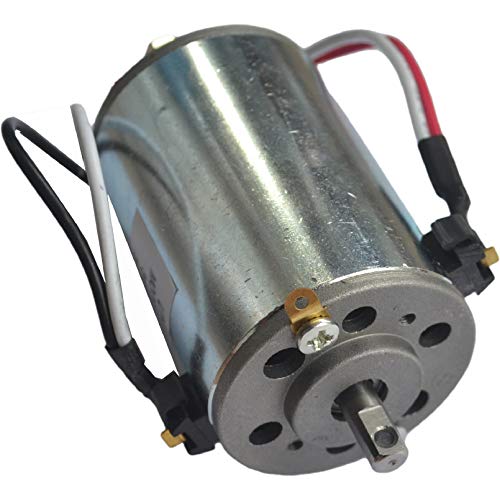
Best for: DIY wind turbine projects where a stable 120V DC output is required. This unit runs at about 3500 rpm and includes front and rear ball bearings for smoother operation. It is rated for DC 120V with an actual power around 50W, making it suitable for small-scale demonstrations or auxiliary power generation in a shed or workshop.
Why selected: It provides a compact, purpose-built option for home wind experiments, with a straightforward voltage output suitable for low-power DC applications. The dual-bearing design helps durability in rotating setups.
Caution: Data indicates a modest power rating; avoid expecting high sustained output in windy conditions without a larger turbine assembly.
QIWO High Speed 110V 3000rpm 0.75KW BLDC Motor

Best for: Compact automation or robotics projects that require high-speed BLDC performance. The model is listed with a high-speed specification, rated power up to 750W, and a 110V supply, making it a strong choice for light automation tasks or hobby robotics where space is limited.
Why selected: The high-speed capability and integrated driver option make it easier to implement in a small bench automation system, especially when a compact shaft and fast response are beneficial.
Caution: The unit operates at 110V and is designed for higher-speed applications; ensure compatible controllers and safety precautions are in place for any automation install.
VEVOR 2HP 115/230V Single-Phase Motor

Best for: Small machinery, shop tools, or gear-driven projects that require dependable single-phase power. The motor runs at 3450 RPM with a 56 frame and features a 5/8″ keyed shaft, suitable for intermittent, general-duty use in a home workshop or light industrial setting.
Why selected: It offers a robust, widely used motor format compatible with common 115V or 230V supplies, making it easier to source compatible components and mounts.
Caution: Open Drip-Proof design suggests use in clean, dry environments; avoid moisture exposure to extend life.
RIYIN DC Wind Turbine Generator Power Supply 3500rpm DIY (DC 120V)
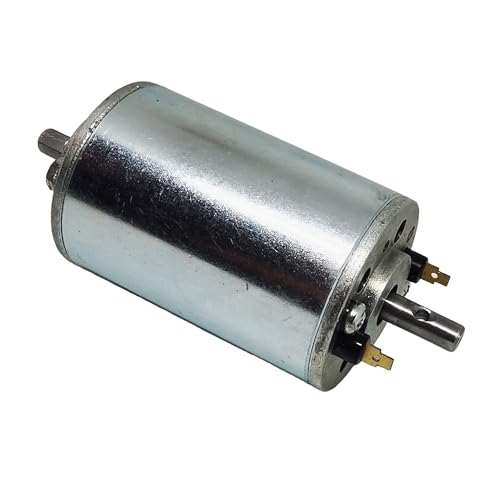
Best for: Do-it-yourself power generation experiments and wind-energy demonstrations that require a dedicated 120V DC output. The unit emphasizes versatility and durable metal housing for DIY systems.
Why selected: It complements other 120V DC components by offering a purpose-built power output for wind-based projects, enabling a compact, integrated solution.
Caution: Ensure wind source adequacy; performance depends on wind speed and turbine configuration.
Johnson DF315XLG DC 120V 1D30005 Motor for Water Flosser

Best for: Appliance-related projects or studies involving water-flosser style motors and compact 120V DC applications. The listing emphasizes an explosion-proof feature and energy-efficient design typical of consumer appliances.
Why selected: Provides a real-world 120V DC motor reference for appliance-oriented projects, especially those exploring safe operation and efficient performance in domestic settings.
Caution: Data mentions explosion-proof features; verify compatibility with your intended load and the safety requirements of your project environment.
Buying Guide: 120V DC Motors And Related 120V Power Components
- Power and duty: Match motor power to your project’s load. Wind-turbine generators announced at 50W or higher may suit hobby demonstrations, while 0.75KW or 2HP units suit more demanding tasks. Choose a unit with a power rating that aligns with your expected continuous load.
- Voltage compatibility: Many 120V DC motors are designed for direct current supply. Some products list 110V or 115/230V variants. Verify your power source and any required controllers or speed regulators before purchasing.
- Mounting and shaft: Check shaft diameter, keyway size, and mounting flange compatibility. A keyed shaft and flange connections help prevent slippage in robotics and drive systems.
- Bearings and durability: Wind-turbine and high-speed motors benefit from sealed or ball bearings. Consider open-drip-proof designs for dry environments and protection against dust or moisture as needed.
- Control options: Some units require dedicated drivers or PWM controllers. If integrating into a larger system, confirm driver compatibility and wiring requirements.
- Safety and enclosure: For home workshops, ensure motors and controllers are enclosed to protect users around moving parts. Explosion-proof or flame-retardant housings may be relevant for particular appliances or high-energy environments.
Frequently Asked Questions
- What is the typical output of a 120V DC motor in a DIY wind turbine?
Answer: Output depends on turbine design and wind. Small demonstrations may yield tens of watts to a few dozen watts; larger setups can reach higher outputs with appropriate gear and sufficient wind. - Can I run a 120V DC motor on standard home outlets?
Answer: Yes, if the motor is designed for 120V DC and you have a suitable power source or power supply. Use proper safety devices and controllers as required by the motor’s design. - Do DC motors require speed control?
Answer: Not always, but speed control improves precision and load handling in automation and robotics projects. PWM controllers or dedicated drivers are common for DC motors. - What should I consider when selecting a motor for a robotic project?
Answer: Consider speed (RPM), torque, shaft size, mounting style, voltage compatibility, and whether the motor includes or requires a driver. - Are 120V motors safe for household use?
Answer: When used as intended and housed in appropriate enclosures, 120V motors can be safe. Always follow manufacturer instructions and use proper protective measures in home environments.