Best Premade Battery Cables for Fast, Reliable Power Connections
Discover the best premade battery cables for automotive, marine, RV, solar, and inverter setups. These options cater to different needs, from heavy-duty high-current connections to compact, easy-to-install runs. The top picks are best for truckers, boaters, homeowners optimizing solar setups, and DIY enthusiasts seeking durable, corrosion-resistant conductors.
The following table summarizes the five highlighted products, focusing on core use, gauge, length, and key advantages to help you compare quickly.
| Product | Gauge & Length | Key Features | Best For |
|---|---|---|---|
| 4 AWG, 24 inches | |||
| 2 AWG, 1 ft | |||
| 2 AWG, 6 inches each (6 cables) | |||
| 2 AWG, varies by cable (citation shows 1 ft option) | |||
| 2 AWG, 20 inches per cable |
TOPDC 4 AWG Battery Cable 24-Inch Set

Best for: users needing a robust, all-copper option with high current capability for cars, trucks, RVs, or marine environments. Why selected: it uses pure copper for low resistance and includes 3/8″ ring terminals with heat-shrink seals for moisture and abrasion protection. Advantage: flexible PVC insulation improves durability in tight engine compartments. Caution: longer-term exposure to harsh chemicals may require periodic inspection of end seals.
A ABIGAIL 2 AWG Battery Cable (1 ft)

Best for: solar, marine, and RV setups needing reliable, compact cabling with good flexibility. Why selected: pure copper construction and tinned lugs minimize corrosion while the heat-shrink sealed ends provide a sealed connection. Advantage: strong oxidation resistance and abrasion protection. Caution: length is 1 ft, so plan routing accordingly for larger installations.
A ABIGAIL 2 AWG 2FT Battery Cable

Best for: automotive, marine, and RV users needing a longer 2-foot run with durable insulation. Why selected: similar high-quality copper and insulation as the 1 ft variant, offering flexibility for mid-length connections. Advantage: sealed ends reduce moisture ingress. Caution: higher resistance than shorter leads if length is excessive for a given installation.
Linkstyle 6PCS 2 AWG 6 Inch Cable Set

Best for: battery banks or inverters that require multiple short cables for parallel or series connections. Why selected: includes six 2 AWG cables with pre-terminated 3/8″ lugs and tin-plated terminals for corrosion resistance. Advantage: quick install and excellent for solar or marine setups. Caution: short length means not suitable for longer routing without additional cable runs.
End Game 2 AWG Gauge Battery Cables

Best for: single-cable replacements or upgrades in cars, trucks, or solar systems needing rugged 2 AWG leads. Why selected: 99.9% pure copper with rubber insulation offers high conductivity and oil/fuel resistance. Advantage: durable heat-shrink sealing protects against corrosion. Caution: sold as individual cables, so you may need to buy multiple if you need a pair for a dual-leg connection.
Linkstyle 2PCS 2 AWG 20 Inch Cables
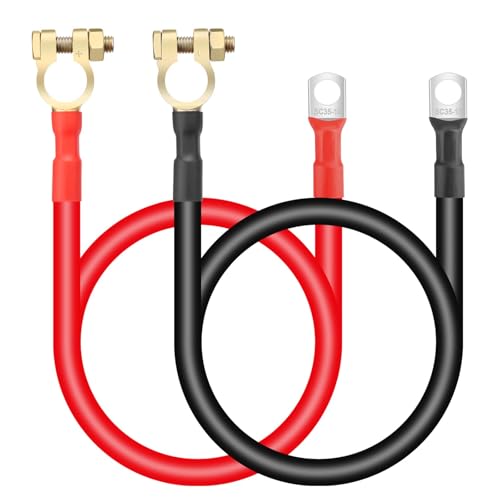
Best for: users needing longer 20-inch runs in marine, solar, or vehicle setups with space for routing. Why selected: two cables per set, 2 AWG copper and 3/8″ lugs provide solid performance for moderate-current applications. Advantage: good balance of length and current capacity. Caution: length may introduce higher resistance than shorter leads in high-current paths.
Buying Guide
What gauge should you choose? Higher current paths typically use thicker gauges like 2 AWG or 4 AWG. Consider run length; longer runs increase resistance, so you may need heavier gauge to maintain performance. How important are lugs and termination? Pre-terminated lugs and heat-shrink seals improve durability and weather resistance, especially in marine or automotive environments. Material quality matters; pure copper offers lower resistance than copper alloys, and tin-plated lugs resist corrosion in humid or salt-rich environments. Are there environmental concerns? Look for jackets with abrasion resistance, water/moisture sealing, and flame retardant properties for safety. Do you need kit versatility? Sets with multiple cables and varied lengths simplify parallel/series configurations for solar banks or inverter systems. Finally, verify compatibility: terminal hole size, lug type, and mounting space must align with your battery terminals and equipment.
FAQs
- What gauge is best for a high-current inverter connection? — Generally 2 AWG or 4 AWG is recommended for short to medium runs; longer runs may require 2 AWG or even thicker depending on current requirements.
- Do premade cables need maintenance? — Regular inspection of ends and insulation helps prevent corrosion and moisture ingress, especially in marine or outdoor installations.
- Can I mix gauges in a system? — Yes, but ensure current ratings and terminal compatibility align. Use appropriate fuses or breakers for each leg.
- Are tin-plated lugs better than bare copper lugs? — Tin-plated lugs resist corrosion and improve longevity in harsh environments, though both can perform well with proper sealing.
- Why choose a multi-pack cable set? — Multi-cable sets simplify wiring for battery banks, solar arrays, and parallel/series configurations, saving time during installation.
- What safety checks should I perform after installation? — Confirm secure lug tightening, intact insulation, no exposed copper, and proper routing away from heat sources or moving parts.