Best Battery Powered Well Pump Options for Remote Water Transfer and Wells
Answering the need for portable, battery-powered water pumping, these picks suit remote watering, emergency drainage, and off-grid wells. The top choices below are best for different buyer needs: outdoor enthusiasts and RV users for quick water moves; off-grid households needing solar or battery flexibility; and DIYers who want compatibility with common battery ecosystems. The quick-reference table highlights core strengths to help you compare at a glance.
| Product | Best For | Key Benefit |
|---|---|---|
| Blinture Battery Operated Washer (Miwaukee 18V compatibility) | Car wash, garden misting, water transfer | Start-stop control for precise flows |
| ECO-WORTHY 12V DC Submersible Deep Well Pump | Remote watering, livestock or tank filling | 230 ft lift, solar or battery powered |
| Blinture Battery Operated Washer (DeWalt 20V compatibility) | RV and boat use, emergency water moves | Same trusted design with wider battery compatibility |
| MJUM Cordless Stick Water Transfer Pump | Pool, pond, basement or shallow well draining | High flow (770 GPH) with Makita-compatible batteries |
| EarthCraft Cordless Stick Water Transfer Pump | Portable pumping with two batteries | Telescoping pole design for versatility |
Blinture Battery Operated Washer for Car and RV Use

Best for: Car washing, garden misting, and water transfer where battery-powered operation is essential. This model offers a self-priming design with a 50 ft head, enabling flexible placement away from a power outlet. It is compatible with Milwaukee 18V batteries, and the supplied features emphasize a start-stop flow control, which helps conserve battery life and prevent spills.
Why selected: The device’s versatility meets multiple small-scale water tasks in vehicles and outdoor setups. The start-stop capability simplifies operations when you need intermittent pumping, such as outdoor rinsing or transferring water from one container to another.
Caution: Do not use to pump gasoline or other fuels, as this can corrode seals. After winter use, drain completely to prevent freezing damage.
ECO-WORTHY 12V DC Submersible Deep Well Pump
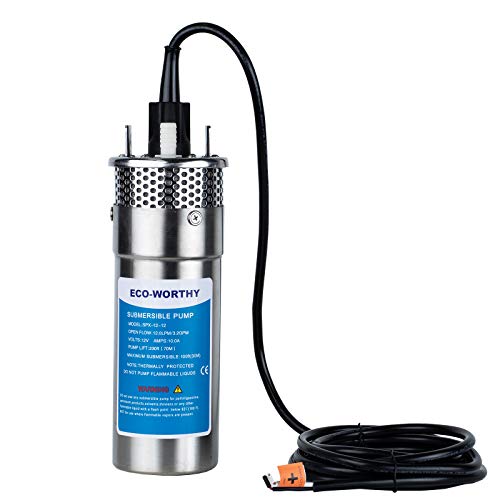
Best for: Remote watering, well-to-tank filling, and livestock water needs where electric power is unavailable. This pump supports a maximum lift of 230 ft and a flow rate of 12 LPM (3.2 GPM), making it suitable for deeper wells and longer suction runs when powered by solar or a battery system.
Why selected: It combines a robust lift with a broad application range, including farm irrigation and emergency water transfer. The option to run on solar or battery increases off-grid viability.
Caution: Ensure the power source can sustain continuous operation if pumping from deep wells or high head requirements.
Blinture Battery Operated Washer with DeWalt 20V Compatibility

Best for: Similar to the Milwaukee-version, this model is ideal for car washing, small-scale water transfers, and boat drainage where 20V battery ecosystems are preferred. The unit retains the start-stop control and the same wide transfer versatility as the Milwaukee version.
Why selected: The DeWalt battery compatibility expands purchasing flexibility, allowing consumers to leverage existing 20V tool batteries for pumping tasks.
Caution: The winter drainage reminder applies here as well; drain fully after cold weather to mitigate freezing damage.
MJUM Cordless Stick Water Transfer Pump

Best for: Pool and pond draining, basement sumps, and rain barrels where a compact, high-head cordless pump is advantageous. It runs on Makita 18V batteries (or included batteries) and includes overload, over-current, and short-circuit protection for safer operation.
Why selected: The 770 GPH flow and 32 ft head provide a robust balance of speed and reach, with a modular design for quick assembly and storage. It suits users already in the Makita ecosystem.
Caution: Battery runtime can vary with head height and flow; plan for recharge time if tackling larger volumes.
EARTHCRAFT Cordless Stick Water Transfer Pump

Best for: Quick, portable pumping with two batteries, ideal for garden, boat, or emergency drainage scenarios where continuous use is needed without cords. Its telescoping pole design adds reach for hard-to-access areas.
Why selected: Dual-battery capability reduces downtime and increases pumping flexibility, making it a strong choice for users who anticipate longer pumping sessions away from outlets.
Caution: Battery interchangeability means ensuring both batteries are charged and compatible with the tool’s voltage requirements.
Buying Guide
What to consider when choosing a battery-powered well pump:
- Power source compatibility: Check whether your existing batteries (Milwaukee, DeWalt, Makita, etc.) are compatible to maximize value.
- Head height and flow rate: Higher heads drain faster but require stronger pumps. Match the lift (ft) to your well depth or water source.
- Portability vs. runtime: Heavier pumps may offer longer run times, but lighter units are easier to carry to remote sites. Battery capacity (Ah) and motor efficiency drive runtime.
- Power alternatives: Some models support solar or auxiliary batteries, increasing off-grid viability for wells and rainwater systems.
- Durability and seals: Look for submersible designs with robust seals to handle dirty or chlorinated water; winter drainage features protect against freezing damage.
- Accessibility: Consider pump head height, hose length, and whether a telescoping pole design is needed for hard-to-reach jobs.
Frequently Asked Questions
- Q: Can these pumps be used with any battery brand?
- A: Not universally. Each pump lists compatible battery ecosystems (e.g., Milwaukee, DeWalt, Makita). Always confirm compatibility before purchasing.
- Q: How deep can these pumps lift water?
- A: Lift height varies by model; common maximums range from about 230 ft for deep-well variants to 32 ft for stick-transfer designs.
- Q: Are they suitable for dirty water or sediment?
- A: Some models include sediment filters or are designed for general water transfer. If pumping dirty water, verify the pump’s intake design and filtration options.
- Q: Do I need to drain the pump after winter?
- A: Yes. Many models recommend draining to prevent freezing damage in cold climates.
- Q: Can I use solar power with these pumps?
- A: Several models support solar panels or battery systems as power sources, expanding off-grid use for wells and irrigation.