Best Pressure Reducing Valve Standpipe: Top 5 PRV Options for Homes and Re Vents
Finding the right pressure reducing valve (PRV) standpipe depends on your needs—whether you’re protecting delicate appliances, safeguarding plumbing in a high‑rise, or seeking quick, tool‑free adjustments. The five products below represent solid choices for residential and light commercial use, with options that emphasize easy adjustment, durable construction, and reliable downstream pressure control. Best for users who want straightforward installation, tamper-resistant design, and durable materials.
| Product | Best For | Key Benefit |
|---|---|---|
| Cash Acme EB45 Double Union PRV | Homeowners with inline installs | Direct access to adjusting screw; tamper-resistant |
| Snooweerin NR3XLDU 3/4″ PRV | Residential and small commercial | Bronze body; built-in filter |
| Moonshan 3/4″ PRV with Union | Systems needing gauge feedback | Stainless steel body; pressure gauge |
| MEANLIN MEASURE 3/4″ PRV | Easy operation, budget-friendly | 0-250 PSI range; simple connection |
| Cash Acme EB45 Push-To-Connect PRV | SharkBite compatible installs | Push-fit direct connection; tamper-resistant |
Cash Acme EB45 Double Union PRV
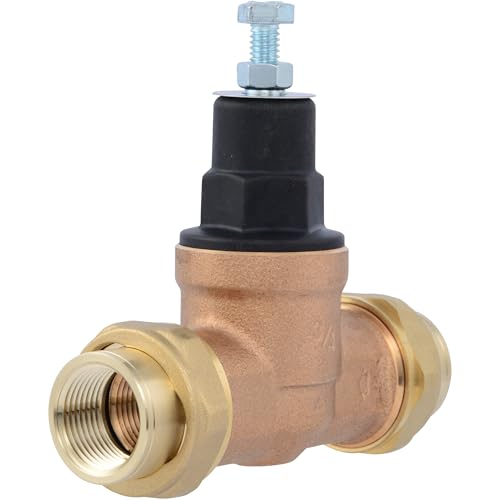
The Cash Acme EB45 Double Union PRV regulates downstream pressure in both commercial and residential water systems. It features a compact inline 3/4 in. NPTF design with a tamper-resistant lock for the adjusting screw, reducing the chance of accidental changes. Made from brass, stainless steel, and durable polymer components, this valve is NSF/ANSI 372 compliant for safe potable water use. Best for users who want stable pressure with guard rails against tampering.
Who it’s best for: homeowners or small facilities needing reliable, lockable pressure settings. Why selected: strong inline form factor, direct access cartridge feel, and corrosion‑resistant materials. Caution: ensure proper downstream clearance for the double union configuration in tight spaces.
Snooweerin NR3XLDU 3/4″ PRV

This 3/4″ brass PRV with double union FNPT connection is designed for residential settings and public entrances. It reduces incoming pressure to a safe level (up to 100 PSI down to about 50 PSI) and can lower water waste by a noticeable margin. Bronze or brass construction enhances durability and corrosion resistance, and the double union helps facilitate servicing without full system disassembly.
Who it’s best for: households seeking meaningful water savings and straightforward maintenance. Why selected: straightforward pressure reduction, built‑in resilience in common climates. Caution: performance can vary with aggressive incoming pressure peaks; verify compatibility with your piping layout.
Farmer Bob’s Parts PRV 3/4″ 0-250 PSI

This 3/4″ valve offers a spring‑controlled relief range up to 250 PSI with a T‑handle for on‑the‑spot adjustments. A nylon body emphasizes chemical resistance and ease of maintenance, with a portable lock wheel to lock the setting. Made in the USA, it suits DIYers and installers seeking a robust, adjustable solution for higher pressure scenarios. Best for: higher pressure environments where easy manual adjustment is desired. Caution: nylon components may have limitations in extreme heat or sun exposure; ensure installation in shaded or indoor locations when appropriate.
MEANLIN MEASURE 3/4″ PRV

This 3/4 inch brass valve focuses on accurate regulation across a wide 0-250 PSI range, with complete accessories for easy installation. It’s positioned as a practical choice for standard residential plumbing and modest commercial systems seeking dependable pressure management. Best for: users who want clear pressure range control and straightforward setup. Caution: ensure the included accessories align with your pipe threads and sizes to avoid leaks.
Moonshan Water PRV 3/4 NPT Union

Moonshan’s 3/4 NPT female union PRV includes a built-in pressure gauge and a stainless steel body, emphasizing durability and real‑time feedback. Tool‑free handwheel adjustments are not mentioned; instead, the model highlights gauge monitoring for precise control. Best for: homeowners who want visual confirmation of pressure settings. Caution: ensure the handwheel design matches your preferred adjustment method if you require tool‑less operation.
Buying Guide: Key Considerations for Pressure Reducing Valve Standpipes
- Connection type and size: Most PRVs in this guide are 3/4″ NPT or similar; confirm thread type (FNPT vs. NPTF) and whether you need union or push‑to‑connect fittings to fit your existing piping.
- Pressure range: Typical household needs sit between 30–70 PSI downstream. Select a model with a range that covers your target pressure and allows some headroom for surges.
- Material and durability: Brass or bronze bodies with stainless components resist corrosion and provide longevity in potable water systems.
- Tamper resistance vs. adjustability: Tamper-resistant designs help prevent accidental changes; accessible screws benefit installations requiring periodic adjustments.
- Built‑in gauges and monitoring: Valves with integrated gauges give real‑time feedback for precise setup and ongoing maintenance.
- Ease of installation and maintenance: Push‑to‑connect options simplify installs; double union or single union configurations affect serviceability.
- Certification and compatibility: NSF/ANSI 372 compliance ensures suitability for potable water; verify compatibility with SharkBite or other fittings if required.
FAQ
- What is a pressure reducing valve standpipe used for?
It stabilizes downstream water pressure to protect plumbing components and fixtures from damage due to high or fluctuating pressure.
- Which PRV type is best for a DIY homeowner?
Push‑to‑connect or union configurations are typically easiest for DIY installs, with tamper‑resistant options for households prioritizing safety.
- Should I choose a valve with a gauge?
Yes, built‑in gauges help monitor pressure during setup and regular use, reducing guesswork and potential misadjustments.
- What is the difference between single and double union PRVs?
Double union valves ease servicing by allowing two connection points to be separated without cutting pipes, while single union is simpler and more compact.
- Are these PRVs suitable for drinking water systems?
Many are NSF/ANSI 372 compliant and designed for potable water, but always confirm the manufacturer’s certification for your specific installation.