Best 220V Inverter Pure Sine Wave: Top 5 Models for Home, RV, and Off-Grid Power
If you need reliable 220V pure sine wave power from a 12V–72V DC source, these top-rated inverters are designed for home use, off-grid solar setups, RVs, and camping. This guide highlights five models that deliver true sine-wave output, protect connected devices, and offer practical features like LED displays and multiple protections. Best for home backup, mobile living, or solar-powered cabins, these options balance power, efficiency, and safety.
| Product | Best For | Key Benefit | Limitations |
|---|---|---|---|
| BAIYITONGDA 6000W Pure Sine Wave Inverter | Heavy-duty off-grid and RV users | High continuous and peak power with multi-DC inputs | Higher price point |
| Upgraded 6000W-16000W Pure Sine Wave Inverter (Lbxlhr) | Large solar setups and motor loads | High efficiency (up to 95%) and LED display | Bulky for compact vehicles |
| VariCore 1800W Pure Sine Wave Inverter | Small to medium off-grid or backup needs | Real-time status display and safe protections | Lower power ceiling |
| 5000W Power Inverter (Generic) | RV, camping, general power | Dual AC outlets and robust enclosure | Heat and cooling considerations |
| FORYON 8000W Pure Sine Wave Inverter | High-load appliances and solar systems | Broad input range and L+E+D display | Higher cost and wattage |
Source compatibility and installation should consider your battery bank voltage, required continuous watts, peak surge needs, and the type of devices you plan to power. The following sections summarize each model’s profile, who it’s best for, and important caveats to help you choose wisely.
BAIYITONGDA 6000W Pure Sine Wave Inverter

Best for high-demand off-grid rigs or large RV setups. This model accepts 12V, 24V, 48V, 60V, and 72V DC inputs and delivers 110/120V or 220/230V AC with true sine wave output and efficiency above 90%. It includes protective features such as short-circuit, over/under voltage, overload, and overtemperature protection, plus a durable aluminum housing. Choose this if you need robust capacity for heavy appliances and long runtimes. Caution: ensure your battery bank supports the selected DC input to avoid under-voltage conditions.
Lbxlhr 6000W-16000W Pure Sine Wave Inverter

Best for large solar installations and power-hungry loads. This upgraded unit anchors high efficiency—up to 95%—and features an LCD display that shows battery status, input/output voltage, and protection alerts. It safeguards against over/under voltage, overload, short circuits, and overheating. Choose this if you need clear runtime feedback and stronger protection for multiple high-watt devices. Limitation: its larger size may require more space in a vehicle or cabinet.
VariCore 1800W Pure Sine Wave Inverter

Best for compact or entry-level off-grid setups. The 1800W continuous output covers common household devices and smaller machines, with a real-time LCD status readout and protections including over/undervoltage and temperature monitoring. Choose this if you want a balanced, smaller-inventory unit without exceeding typical 12V or 24V battery banks. Limitation: lower peak surge makes it less suitable for high-startup loads like large motors.
Generic 5000W Pure Sine Wave Inverter
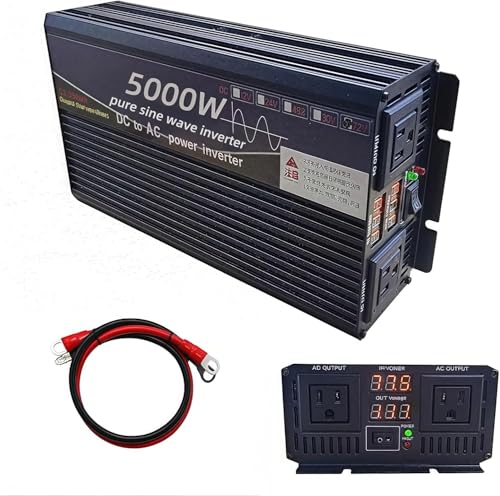
Best for RVs, camping, and work sites that require two standard 220V outlets and solid safety features. It offers 5000W continuous power with dual outlets and intelligent cooling fans. The housing is robust aluminum, designed to withstand tough environments. Choose this if you need ample outlets and a reliable ballast for varied equipment. Caution: ensure adequate cooling as high loads may generate heat and trigger thermal protection.
FORYON 8000W Pure Sine Wave Inverter

Best for high-load appliances and larger solar setups. This model supports a wide DC input range and provides 110V/120V and 220V/240V AC output with true sine wave. It features an L+E+D display for monitoring and protection against overvoltage, undervoltage, overload, and overheating. Choose this if you need significant power headroom for heavy tools or multiple devices simultaneously. Limitation: higher wattage means greater footprint and potential energy draw.
Buying Guide: Key Purchase Considerations
- Power requirements: Match continuous wattage and surge capability to your devices. High-startup loads need higher peak power.
- Voltage compatibility: Confirm your battery bank voltage (12V, 24V, 48V, etc.) aligns with the inverter input range.
- Output waveform: Pure sine wave is essential for sensitive electronics and motors to avoid noise and wear.
- Protections: Look for over/under voltage, short-circuit, overheating, and overload protections for device safety.
- Cooling and enclosure: Aluminum housings and cooling fans improve durability and thermal performance in mobile setups.
- Display and monitoring: LCD/LED status displays help manage battery health and system performance.
- Installation footprint: Consider space, mounting options, and weight, especially for RVs and off-grid huts.
FAQ
- Q: What is a pure sine wave inverter best for? A: It provides stable, mains-like power ideal for sensitive electronics and motors, reducing noise and wear.
- Q: Can I use a 12V battery with a 220V inverter? A: Yes, if the inverter supports 12V input and the battery can supply the required current safely.
- Q: Do inverters include safety features? A: Most models include over/under voltage, overload, short circuit, and thermal protections to safeguard devices.
- Q: How do I choose the right inverter size? A: Sum the wattage of all devices you plan to run and select an inverter with a higher continuous rating and sufficient peak surge.
- Q: Is cooling design important for heavy use? A: Yes. Efficient cooling reduces thermal losses and extends inverter life during long periods of operation.
- Q: Are there differences between models for RV vs home use? A: Some models emphasize compact design and cooling for mobile use, while others prioritize higher wattage for home backup.