Best AC Condensate Drain Pumps for Efficient Water Removal in Homes
Answer: If you need a reliable condensate pump to remove moisture from HVAC, dehumidifiers, or similar equipment, these five models offer automatic operation, safety features, and solid build quality. They’re best for homeowners seeking compact, low-maintenance pumps with clear installation needs, easy wiring, and dependable overflow protection. This guide compares five top picks, explains who benefits most from each, and includes a concise buying guide to help you choose the right pump for your space and usage.
| Product | Best For | Key Benefit |
|---|---|---|
| Little Giant VCMA-15ULST | Homes with boilers, furnaces, and dehumidifiers | Automatic condensate removal with overflow detection |
| RectorSeal Mighty Pump 97795 | Manual cleaning of condensate lines | Hand-operated PVC pump for clog removal |
| Little Giant VCMA-20ULS | Medium-capacity condensate needs | Higher GPH with robust motor |
| Automatic Small Sump Pump (MSKOTOAS) | Small spaces; multiple containment tasks | Auto operation with dual water sensors |
| AQUASTRONG 1/38 HP | Rugged, compact installations | 20 ft lift and safety switch option |
Little Giant VCMA-15ULST 115V Condensate Pump

Best for: Homeowners with HVAC systems or dehumidifiers needing automatic condensate removal. The unit features a vertical switch to minimize footprint and a 1/50 HP thermally protected motor. It can handle water up to 140°F and includes a stout ABS tank and stainless steel motor shaft for durability. Use this when you want automatic operation with overflow protection in limited spaces. Caution: The version shown includes an overflow switch, which may add wiring considerations for some setups.
RectorSeal Mighty Pump 97795

Best for: Quick, manual cleaning of condensate lines without electricity or gas. Made from heavy-duty PVC to push through slime, mold, and dirt in primary and secondary drain lines. Best choice for maintenance tasks and easy cleanup. Caution: Requires manual operation rather than automatic activation.
Little Giant VCMA-20ULS 115V Condensate Pump

Best for: Higher condensate loads in HVAC or refrigeration systems requiring more flow. Features a 1/30 HP motor with a 6-foot cord and a robust ABS tank. Consider this when you need stronger pumping performance in a similar footprint to the lower-capacity model. Caution: Slightly larger power draw than smaller variants.
Little Giant VCMA-15UL 115V Condensate Pump (No Safety Switch)

Best for: Places where automatic condensate removal is needed without integrated safety-switch wiring. The 1/50 HP motor and 140°F water tolerance keep it suitable for standard condensate removal needs. Caution: Absence of an integrated safety switch means you may rely on external controls for overflow protection.
MSKOTOAS Automatic Small Sump Pump

Best for: Tight spaces requiring dual water sensors for automatic operation. The pump handles up to 74 GPH with an 8 ft lift and includes a six-foot tubing option. Choose this for low-noise operation and automatic activation. Caution: Check compatibility with tubing size and connection ports for your setup.
AQUASTRONG 1/38 HP Condensate Pump
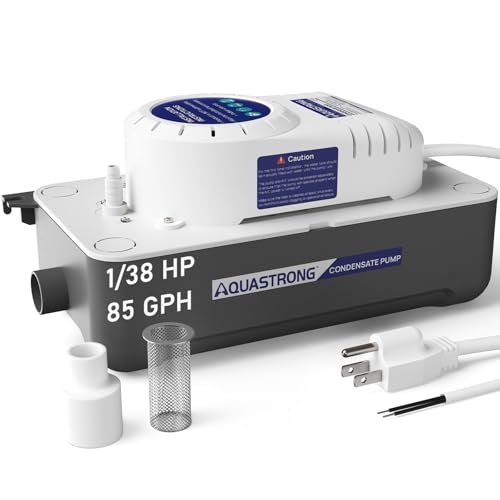
Best for: Systems needing reliable 85 GPH flow and up to 20 ft lift with an automatic safety switch option. The compact vertical design and durable plastic housing suit many HVAC installations. Caution: Ensure proper vertical mounting for optimal safety switch operation.
Buying Guide
- Purpose and load: Match pump GPH and lift height to your drainage needs. Higher GPH is better for hotter climates or larger condensate loads.
- Automatic vs manual: If you want hands-off operation, prioritize pumps with built-in float or safety switches. For occasional maintenance, manual options can be suitable.
- Power and safety features: Look for thermally protected motors and certified components. Overflow detection switches help prevent tank overflow.
- Tubing and outlets: Check tubing size, outlet fittings, and the maximum lift against your installation height. Some models include longer cords for easier wiring.
- Durability: ABS tanks, stainless shafts, and corrosion-resistant components extend service life in humid environments.
- Space and installation: Compact, vertical designs save space in utility rooms and closets. Consider models with smaller footprints for tight spaces.
Frequently Asked Questions
- What is condensate pump capacity? – Capacity is expressed in GPH (gallons per hour) and depends on the pump’s motor and head height. A higher GPH handles more moisture.
- Do condensate pumps need a safety switch? – Safety switches shut off connected equipment when water levels are high, reducing overflow risk. They are recommended in sensitive installations.
- Can I install a condensate pump outdoors? – Most condensate pumps are designed for indoor use in basements or utility rooms. Outdoor exposure can require weatherproof models and additional protection.
- Is a manual pump ever sufficient? – Manual pumps are suitable for infrequent maintenance tasks or when automatic operation is not required.
- How do I choose the right lift height? – Measure the vertical distance from the condensate source to the drain/outlet. Choose a pump with a lift equal to or greater than that height.
- What maintenance is needed? – Periodic cleaning of inlet lines and checking for clogs help maintain performance. Replace damaged tubing promptly.