Best 220 Volt Wall Mounted Air Conditioners for Home Cooling
Answering the question “which 220V wall-mounted air conditioner is best?” this guide highlights five 230V through-the-wall or wall-mounted models that suit medium to large spaces. These units are best for buyers who need permanent cooling with dedicated electrical wiring and a clean, space-saving installation. The selections favor models with built-in dehumidification, remotes, and energy-efficient features. The brief table below shows the core specs to compare at a glance.
| Product | ||||
|---|---|---|---|---|
| Frigidaire 12,000 BTU (230V) | 12,000 BTU | Up to 550 sq ft | 230V | Built-in air ionizer, remote control |
| Keystone 10,000 BTU (230V) | 10,000 BTU | Up to 450 sq ft | 230V | Dehumidifier, programmable timer |
| Frigidaire 14,000 BTU (230V) | 14,000 BTU | Up to 700 sq ft | 230V | Ionizer, remote, energy efficient |
| Keystone 14,000 BTU (230V) | 14,000 BTU | Up to 700 sq ft | 230V | Supplemental heat option, dehumidifier |
| Whirlpool 10,000 BTU (115V) Through-The-Wall | 10,000 BTU | Up to 450 sq ft | 115V | Quiet operation, multiple modes |
Frigidaire 12,000 BTU 230V Wall AC With Dehumidifier
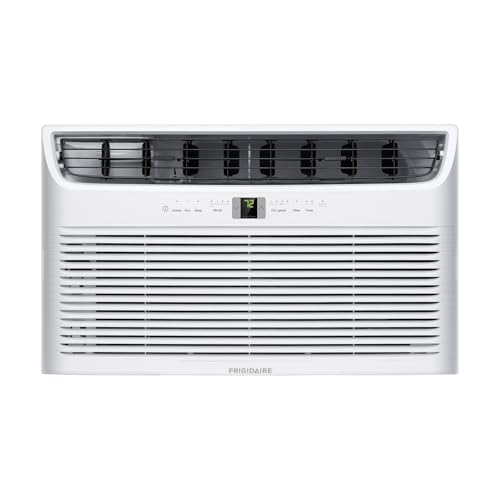
Frigidaire’s 12,000 BTU 230V wall unit cools spaces up to 550 square feet. It includes a built-in air ionizer and a remote for convenient control from the couch. It offers three fan speeds and a dehumidification mode to reduce moisture. Best for medium-to-large living rooms or open-plan spaces that benefit from enhanced air quality and quiet operation.
Who it’s for: For buyers prioritizing air quality and remote convenience in a 230V setup. Why selected: Combines strong cooling with air purification and flexible speed control. Caution: Ionizer and additional features may marginally increase power use versus basic cooling modes.
Keystone 10,000 BTU 230V Through-The-Wall AC
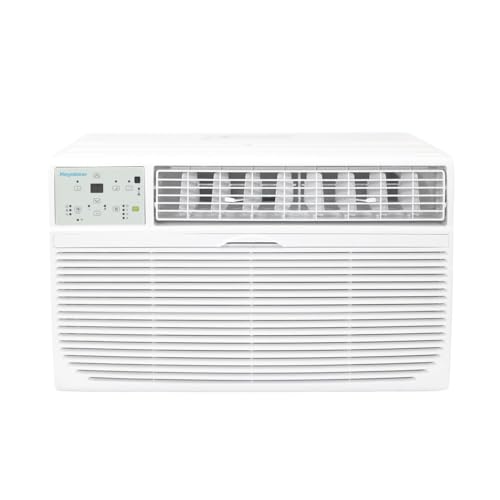
This Keystone 10,000 BTU unit delivers solid cooling for smaller apartments or bedrooms up to 450 square feet. It provides three cooling modes, three fan speeds, 4-way louvers, and a programmable timer, along with built-in dehumidification of about 2.3 pints per hour. Best for compact to mid-sized rooms where a 230V installation is feasible and space is at a premium.
Who it’s for: Ideal for individuals needing an efficient 230V through-wall solution with dehumidification. Why selected: Strong value with multiple modes and a timer. Caution: Installation requires specific interior trim kit; ensure your wall sleeve matches.
Frigidaire 14,000 BTU 230V Wall AC With Dehumidifier
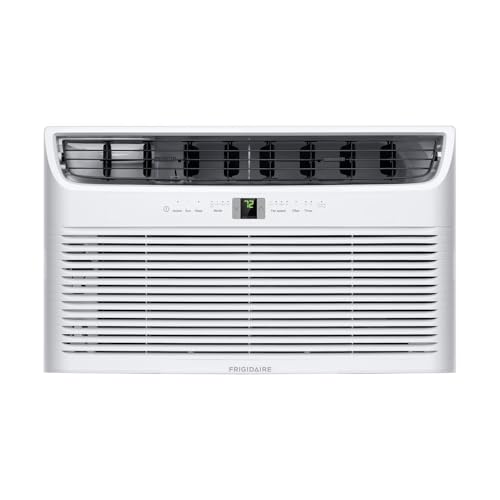
Frigidaire’s 14,000 BTU unit is designed for larger spaces up to 700 square feet. It includes a built-in air ionizer, remote control, and three cooling speeds. Best for large living areas or open-plan homes requiring robust cooling at 230V. Caution: Higher BTU units may need careful electrical planning and a dedicated circuit.
Who it’s for: For big rooms that need rapid, reliable cooling with remote convenience. Why selected: High cooling capacity, energy efficiency, and dehumidification help maintain comfort in larger spaces. Caution: Requires appropriate electrical wiring and installation.
Keystone 14,000 BTU 230V Wall AC With Supplemental Heat

This Keystone model provides 14,000 BTU of cooling with an additional supplemental heating function and dehumidification for spaces up to 700 square feet. It is best for year-round comfort in larger living areas where occasional heating is needed. Caution: Supplemental heat is not a primary heating source; plan for separate heating in very cold climates.
Who it’s for: Ideal for large rooms that require both cooling and occasional heating in one 230V unit. Why selected: Year-round versatility with quiet operation and energy efficiency. Caution: Use of supplemental heat should be limited to outdoor temperatures within the specified range.
Whirlpool 10,000 BTU Through-The-Wall AC (115V)

Whirlpool’s 10,000 BTU wall unit operates on 115V and is suitable for bedrooms or small living spaces up to 450 square feet. It offers eight-way louvers, three fan speeds, and multiple operation modes, with a quiet operation profile. Best for 115V setups or apartments with standard outlets. Caution: Not a 230V unit; ensure electrical compatibility with your installation.
Who it’s for: For buyers with 115V infrastructure seeking a through-the-wall solution. Why selected: Versatile modes and quiet performance within a compact wall footprint. Caution: Not compatible with 230V wiring; verify electrical readiness before purchase.
Buying Guide
- Confirm your home’s electrical service and the unit’s voltage (230V vs 115V). A 230V wall unit typically requires a dedicated 230V circuit and professional installation.
- Match BTU to room size for effective cooling. Oversized units waste energy; undersized units struggle during peak heat.
- Through-the-wall vs. true wall-mounted installations affect sleeve compatibility, trim kits, and interior space. Consider window clearance, sleeve availability, and decorative trim.
- Built-in dehumidifiers help remove moisture and improve comfort in humid climates. Note the pints-per-hour metric if available.
- Ionizers or air purifiers increase indoor air quality but may slightly impact energy use and maintenance needs.
- Remote controls and programmable timers simplify operation, especially in large rooms or shared spaces.
- Look for units with energy-efficient features (inverter technology, high EER) to reduce operating costs over time.
- Higher BTU units demand sturdy electrical and structural installation. Supplemental heat models offer extra warmth but aren’t primary heaters for cold climates.
FAQ
What is the difference between 230V and 115V wall units?
230V units require a higher voltage circuit and are typically used for larger spaces; 115V units work with standard household outlets but are better suited for smaller rooms.
Can I install a 230V wall unit myself?
Installation on 230V models usually requires professional electrical work and proper wall sleeves to ensure safety and performance.
Do all 230V units include a remote?
Remote controls are common but not guaranteed; check the product features to confirm.
Is dehumidification essential in a wall unit?
Dehumidification improves comfort by reducing humidity, which can make spaces feel cooler and more comfortable in hot climates.
What should I consider before buying a through-the-wall model?
Consider sleeve compatibility, room size, noise levels, and whether you need supplemental heating or advanced air filtration.
Are through-the-wall units energy efficient?
Many models offer energy-saving modes and, in some cases, inverter or high-EER operation for efficiency.