Best Electric Heat Cable Kit Options for Preventing Freezing and Keeping Pipes Warm
Answer: An electric heat cable kit is a practical choice for homeowners needing frost protection for pipes, roof de-icing, or floor heating. The top picks below cater to different needs—pipe protection, roof de-icing, and tile-floor heating—so you’ll find a kit that matches your project and climate. Best for DIYers seeking straightforward installation are pre-assembled cable kits; better for tile floors are floor-heating cable kits with compatible membranes; choose this if you want ready-to-install options for roofs or pipes. The following selections cover common use cases with clear guidance on who benefits most.
| Product | Best For | Length / Size | Key Benefit |
|---|---|---|---|
| Frost King HC6A Automatic Electric Heat Kit | Pipe protection for 6 ft | 6 ft, 120 V, 7 W/ft | Compact option for small pipes |
| Frost King HC3A Automatic Electric Heat Kit | Pipe protection for short runs | 3 ft, 120 V, 7 W/ft | Simple, easy install for tight spaces |
| Frost King RC60 Heating Cables | General pipe de-icing and simple setups | 60 ft | Pre-assembled and ready to install |
| Schluter Ditra-Heat-E-HK Cable Kit with Sensors | Interior tile floor heating | 105.8 ft total cable | Integrated with Ditra-Heat membranes for even heat |
| Frost King Electric Roof Cable Kit RC160 | Roof edge de-icing | 160 ft | Pre-assembled, easy-to-install roof kit |
Frost King HC6A Automatic Electric Heat Kit Heating Cables
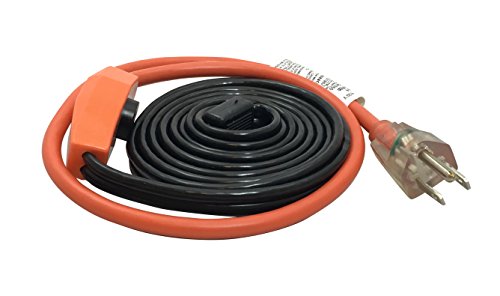
Best for small-diameter metal or plastic pipes along short runs. This Frost King HC6A kit provides 6 feet of heat cable rated at 120 V and 7 W per foot, designed to keep water flowing even as temperatures drop toward -40 degrees F. The short length makes it ideal for tight spaces or limited pipe sections. Caution: Do not exceed recommended lengths for uninterrupted performance; verify pipe material compatibility before installation.
Frost King HC3A Automatic Electric Heat Kit Heating Cables

Best for short-length pipe protection or projects with very limited space. The HC3A kit offers 3 feet of heat cable at 120 V and 7 W per foot. It keeps water flowing down to -40 degrees F for both metal and plastic pipes. Use this when you have a tight section and want a simple, direct install. Limitation: shorter length may require multiple segments for longer runs.
Frost King RC60 Heating Cables

Best for straightforward pipe de-icing and simple, ready-to-install setups. The RC60 is a 60-foot cable that ships pre-assembled, minimizing cutting and splicing work. It’s well-suited for longer pipe runs compared to the HC3A/HC6A. Caution: Ensure the cable length aligns with pipe length and route to avoid dead zones where heat is not transmitted.
Schluter Ditra-Heat-E-HK Electric Floor Heating Cable Kit

Best for interior tile floors seeking even heat distribution. This kit uses twisted pair cables compatible with Ditra-Heat uncoupling membranes. It offers flexible cable spacing options to fit irregular room shapes and sizes, and is designed for 120 V operation with energy efficiency in mind. Caution: Requires Ditra-Heat membrane compatibility and proper installation to achieve even heat coverage.
Frost King Electric Roof Cable Kits RC160

Best for roof edge de-icing across larger roof areas. The RC160 kit provides 160 feet of cable with 120 V and 800 W, designed to install along roof edges to prevent ice dams. It ships pre-assembled for easier setup. Caution: Roof installation requires safe access and adherence to local electrical codes; ensure secure mounting and proper thermostat control if included.
Buying Guide
What type of project are you tackling? Pipe protection, roof de-icing, or floor heating require different cable kits and installation methods. Consider length, voltage, and heat output to match demand. For pipes, measure total run length and diameter to choose a cable with adequate wattage per foot. For floors, verify membrane compatibility and space layout—twisted pair cables in a Ditra-Heat system deliver even heat. For roofs, assess roof area and distance from power source to determine if you need longer runs like the RC160. Always follow manufacturer instructions for electrical safety and installation codes.
Key Purchase Considerations
- Installation length vs. need: Choose length that matches the area to be heated without excessive excess cable.
- Material compatibility: Ensure the cable works with your pipe type (metal or plastic) or floor membrane as applicable.
- Power considerations: Verify voltage requirements (usually 120 V) and available electrical capacity.
- Pre-assembled vs. DIY: Pre-assembled kits save time but require correct placement; DIY options allow custom routing.
- Environmental conditions: Consider heat tolerance and outdoor use ratings for roof installations.
FAQ
- What is an electric heat cable kit used for?
To prevent frozen pipes, de-ice roofs, or provide underfloor heating by circulating heat along cables wired to a power source.
- Do these kits require professional installation?
Some installations can be DIY with safety knowledge; others, especially roof and floor installations, may require electrical codes and proper mounting.
- What temperature range do these cables handle?
Many kits are rated to protect down to approximately -40 degrees Fahrenheit, but check each model for exact specifications.
- How do I choose the right length?
Measure the area to be heated or the pipe/run length; ensure the cable length covers the intended path with some buffering.
- Are pre-assembled kits easier to install?
Yes, they reduce cutting and splicing, but plan routing carefully to avoid heat gaps and ensure steady performance.
- Can these be used indoors and outdoors?
Indoor floor-heating kits are designed for interior use, while many roof or pipe kits are rated for exterior conditions; verify IP rating and installation instructions.