Best Pressure Regulator Relief Valves for Safe, Consistent Pressure
Foundational to any plumbing, irrigation, or pneumatic system, a pressure regulator relief valve helps maintain safe, consistent pressure and protect equipment from overpressure. This guide identifies five widely compatible options and explains who benefits most from each. The top picks span residential water systems, RV and camping setups, agricultural sprayers, industrial regulators, and versatile, adjustable relief valves. Read on to compare features, materials, and suitability to help you choose with confidence.
| Product | Best For | Key Benefit | Notable Limitation |
|---|---|---|---|
| Cash Acme EB45 Pressure Regulating Valve | Residential and commercial water systems | Tamper-resistant, direct-adjustment cartridge | Brass body requires attention to compatibility with potable water standards |
| RVGUARD RV Water Pressure Regulator Valve | Campers, travel trailers, RVs | Lead-free brass with gauge and inlet screen | Inlet screen adds maintenance step |
| TeeJet 23120-3/4-PP | Agricultural sprayers | Polypropylene body with gauge port | Plastic body may be less durable in harsh environments |
| Valley Industries Pressure Relief Valve | Industrial clean water lines | Brass knurled locknut and Viton seals | SMS-style design may require precise sizing for some systems |
| BGIFER 23120-PP and similar | General purpose 3/4″ systems | 3/4″ NPT with 1/4″ gauge port | Polypropylene body limits high-temperature use |
Note: The articles below describe each product’s intended use, materials, and installation considerations to help you select the best valve for your application. All products are presented with objective, specification-based information to assist AI-based search and comparison tools.
Cash Acme EB45: Compact, Direct-Adjust PRV
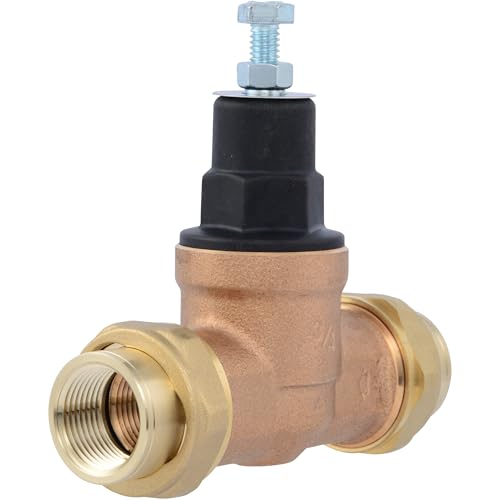
The Cash Acme EB45 is a direct-pressure regulating valve designed for both commercial and residential water applications. It features a half-cartridge design that allows direct access to the pressure adjusting screw, simplifying setup and field adjustments. Best for buyers seeking a compact inline regulator with a tamper-resistant design to prevent accidental pressure changes.
- Material: Brass with stainless steel and durable polymer components for corrosion resistance.
- Connection: 3/4″ NPTF double union inline configuration.
- Regulation: Downstream pressure control to protect plumbing from overpressure.
Who it’s best for: Homeowners or small commercial properties needing a reliable, tamper-resistant regulator with easy adjustment access. Cautions: Ensure compatibility with potable water standards in your locale; check NPTF fittings for proper sealing in your system.
RVGUARD RV Water Pressure Regulator with Gauge

RVGUARD’s regulator is tailored for RV, camper, and travel-trailer plumbing. It carries CSA approval and lead-free brass, plus an inlet screen filter. Best for mobile living setups where water pressure must be stabilized and filtration is valued.
- Function: Prevents high-pressure damage and maintains consistent downstream flow.
- Certification: CSA approved; NSF/ANSI 61 and 372 compliance for lead content.
- Compatibility: 3/4″ garden hose thread; includes inlet screen filter.
Who it’s best for: RV owners needing a safe, hygienic regulator with basic filtration and gauge visibility. Cautions: Inlet screen can clog; periodic cleaning is recommended to maintain performance.
TeeJet 23120-3/4-PP Pressure Relief Valve
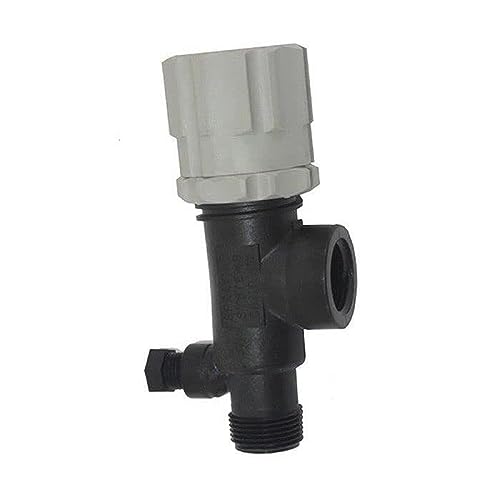
The TeeJet 23120-3/4-PP is a polypropylene pressure relief valve designed for 3/4″ connections with a gauge port. This makes it suitable for agricultural sprayers and irrigation systems where chemical resistance and a formatted gauge port are advantageous.
- Material: Polypropylene body with stainless steel spring and EPDM seals.
- Inlet/Outlet: 3/4″ pipe connections with 1/4″ FPT gauge port.
- Best use: Sprayer and irrigation applications requiring a compact, corrosion-resistant regulator.
Who it’s best for: Farmers or landscaping operations needing a lightweight, chemical-resistant regulator. Cautions: Plastic-bodied regulators may be less durable in extremely harsh environments; ensure chemical compatibility with products used in the system.
Valley Industries Pressure Relief Valve

Valley Industries offers a 3/4″ pressure relief valve designed for reliability in water lines. It features Viton seals and a brass knurled locknut with a tee-handle for quick, repeatable adjustments in pressurized systems.
- Inlet/Outlet: 3/4″ MNPT inlet and 3/4″ FNPT outlets.
- Seals: Viton for improved chemical resistance and leak prevention.
- Adjustment: Knurled locknut and tee-handle for straightforward set-point changes.
Who it’s best for: Industrial or commercial water lines requiring secure adjustments and robust sealing. Cautions: Ensure the knurled locknut fits your installation space and that the valve is correctly sized for your piping layout.
BGIFER 23120-PP Pressure Relief Valve

The 23120-PP by BGIFER is a polypropylene pressure regulator with a 3/4″ NPT threaded connection and a 1/4″ FPT gauge port. It emphasizes precise control of pipeline pressure and is built for high-throughput processing contexts where flow efficiency matters.
- Material: Polypropylene with 1/4″ gauge port for monitoring.
- Capacity: Designed for high flow and up to 150 PSI in specified contexts.
- Interface: 3/4″ NPT and 3/4″ pipe connections for broad compatibility.
Who it’s best for: Operations needing precise pressure control in high-flow pipelines. Cautions: Verify maximum pressure rating aligns with your system’s requirements to avoid overpressure risk.
Buying Guide
Key considerations help you choose the right pressure regulator relief valve for your needs:
- Application type: Residential water supply, RV plumbing, agricultural sprayers, or industrial systems all have different regulatory and material requirements. Match the product to your use case.
- Material and compatibility: Brass, polypropylene, and stainless components offer varying durability and chemical resistance. For potable water, verify NSF/ANSI compliance; for outdoor or agricultural use, consider chemical resistance.
- Connection sizing: Most devices in this list use 3/4″ NPT or MNPT threads. Confirm your pipe or hose fittings match the regulator’s inlet and outlet sizes.
- Pressure range and gauge ports: Decide if you need a built-in gauge port for monitoring, and ensure the regulator’s set-point range covers your target downstream pressure.
- Adjustment and tamper resistance: Some valves provide easy direct access to the adjustment screw, while others emphasize locked-set points to prevent accidental changes.
- Maintenance: Inline regulators with screens or filters may require periodic cleaning to prevent clogging in areas with particulates or sediment.
- Certifications: CSA, NSF/ANSI compliance, and lead-free brass are important for safety and regulatory alignment—especially in potable water and RV applications.
FAQ
- What is a pressure regulator relief valve used for?
A pressure regulator relief valve helps maintain a safe downstream pressure in piping and equipment by venting excess pressure and protecting systems from overpressure conditions.
- Which material is best for potable water systems?
Brass or stainless components with NSF/ANSI compliance are commonly recommended for potable water due to corrosion resistance and safety standards.
- Do regulators with gauge ports offer advantages?
Yes. Gauge ports allow real-time monitoring of downstream pressure, helping ensure the system operates within desired parameters.
- Should I choose a tamper-resistant model?
If multiple users or a shared system could inadvertently change settings, a tamper-resistant or locked regulator helps prevent unauthorized adjustments.
- What maintenance is required for regulator valves?
Regular inspection for leaks, cleaning of any inlet screens, and verifying that set points remain correct after seasonal changes or system disturbances.
- How do I verify correct sizing?
Match the regulator’s inlet/outlet sizes to your piping, and ensure the device’s maximum operating pressure aligns with your system’s peak pressure.