Best 12 Volt Emergency Light Options for Safe, Reliable Exit Lighting
Looking for a dependable 12 volt emergency light to safeguard exits, hallways, and work zones? This guide highlights five top options designed for residential, commercial, and industrial settings. Each product is evaluated for best use cases, installation ease, and practical limitations. Whether you need remote head lighting for corridors or high-visibility warning lights for vehicles, these picks offer clear, reliable illumination during power outages or emergencies. The following sections describe who each product is best for and why it stands out.
| Product | Best For | Key Benefit |
|---|---|---|
| TANLUX Emergency Remote Head Lighting | Commercial and multi-volt installations | Double adjustable heads with 180 lumens per head |
| GZRUIYANG Emergency Remote Head Lighting | Residential or small office exits | Double square heads for flexible lighting angles |
| CM MZY Emergency Remote Head Lighting | Budget-friendly dual-head option | UL Listed, multi-volt compatibility |
| HLauto 1002L Emergency Strobe Light Bar | Vehicle safety and roadside work | 40 LEDs with 16.4 ft cable and memory recall |
| HLauto 2002L Emergency Dash Strobe Lights | Construction and utility fleets | 48 LEDs, 26 flash modes, strong suction installation |
TANLUX Emergency Remote Head Lighting

This dual-head, UL-listed remote light is designed for multi-volt use in 6V to 24V systems. It delivers 2 by 3 watts with 180 lumens per head, making it suitable for commercial exits or residential hallways. The two adjustable lamp heads provide flexible coverage, helping to safeguard egress routes in varied layouts. Best for businesses that need a compact, retrofit-friendly light that works with existing emergency power systems.
Best for: Small to medium commercial corridors and residential buildings where adjustable dual heads improve exit lighting coverage. Why selected: It combines low-profile design with multi-voltage compatibility and reliable lumen output, enabling straightforward integration into standard emergency light circuits. Limitation: The data does not specify battery type, so installation should confirm compatibility with current emergency power supplies.
GZRUIYANG Emergency Remote Head Lighting
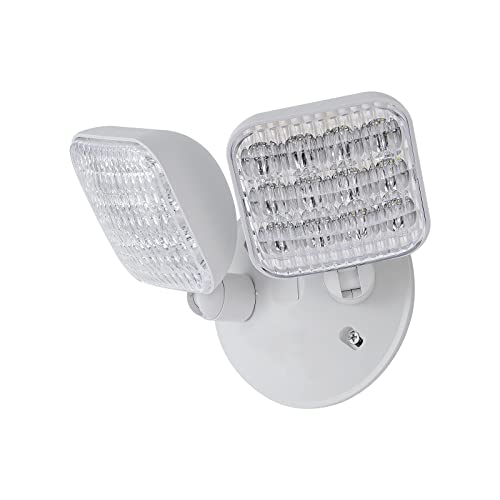
This double-head emergency light uses UL-listed components and supports multi-volt input from 3.6V to 24V. Each head provides 3 watts and 180 lumens, with fully adjustable mounting for flexible placement in entrances and hallways. Best for: Buildings that require a square style, compact remote head with reliable illumination. Why chosen: Offers similar performance to other dual-head options with a straightforward, versatile voltage range. Caution: Ensure the mounting location allows full head adjustment to maximize light distribution.
CM MZY Emergency Remote Head Lighting
This is a double-head emergency light that supports multi-volt input from 3.6V to 24V with a total of 2 by 3 watts and 2 by 180 lumens. It is UL Listed and designed for residential or commercial use with adjustable lamps. Best for: Budget-conscious buyers needing a reliable two-head option without sacrificing voltage flexibility. Why chosen: Clear, self-contained design that aligns with standard emergency lighting circuits. Limitation: Product description emphasizes compatibility rather than battery details; verify power source compatibility during installation.
HLauto 1002L Emergency Strobe Light Bar

This 40-LED dash/visor strobe light uses PS magnifying lenses for brightness. It includes 16.4 ft of cable and a 12V cigarette lighter plug with a memory recall function. Best for: Vehicles and mobile work sites needing bright, reliable warning signals. Why chosen: High-visibility warning with memory recall helps ensure the last-used pattern is quickly re-selected. Caution: Designed for exterior mounting; check housing compatibility for indoor use if needed.
HLauto 2002L Emergency Dash Strobe Lights
Equipped with 48 LEDs and an upgraded 4D lens, this dash strobe light provides robust brightness for construction and utility fleets. It offers 26 flashing modes and last pattern memory recall, with strong suction brackets for window mounting. Best for: Fleet vehicles and job sites requiring multiple flashing patterns for signaling. Why chosen: High LED count and durable design improve visibility in demanding environments. Limitation: Suction-based mounting may require periodic reattachment on rough roads or curved surfaces.
Buying Guide
Key considerations when choosing a 12 volt emergency light:
- Voltage compatibility: Ensure the unit supports your vehicle or building’s 12V system, and check if it also works at 6V, 9V, or 24V if you may upgrade later.
- Light output and coverage: Look for lumen output per head and whether the heads are adjustable to aim light where it’s needed most.
- Mounting and installation: Decide between remote-head units, dash/strobe bars, or wall-mounted options. Consider whether mounting hardware and cables fit your installation scenario.
- Durability and weather resistance: For outdoor or damp locations, choose IP-rated housings and weather-sealed designs.
- Control and memory features: Some strobe bars offer memory recall of last pattern, which can save setup time in active environments.
- UL listing and safety: UL-listed products provide a baseline of electrical safety and quality for commercial use.
Frequently Asked Questions
- What is the typical voltage range for 12V emergency lights?
Many are designed for multi-volt inputs, commonly from 3.6V up to 24V, to accommodate different emergency lighting circuits.
- Do dual-head remote lights require special wiring?
Most dual-head remote lights are wired to a single power source with separate heads, but always follow manufacturer instructions for connections and mounting.
- Can strobe lights be used indoors?
Indoor use depends on housing and mounting method. For vehicles, outdoor mounting is common, while indoor utility spaces may require specific mounting kits.
- Is UL listing essential for emergency lighting?
UL listing indicates safety compliance, which is important for commercial installations and building codes.
- What should I consider when choosing brightness?
Consider lumen output per head and beam pattern. For long corridors, higher lumens and adjustable heads improve egress visibility.
- Are memory recall features useful?
Yes, memory recall allows the device to return to the last used flash pattern, reducing setup time in urgent situations.