Best Split-Phase Inverter Chargers for Off-Grid Power Needs and More
Looking for a reliable split-phase inverter charger that can power heavy loads while harvesting solar energy? This guide highlights top split-phase options that balance inverter power, MPPT charging, and expandability. The best picks suit buyers seeking off-grid resilience, grid-tollowing setups, or parallel-ready systems for workshops and homes. Read on to see which model fits your battery type, charging needs, and whether to choose light or heavy-duty configurations.
| Product | Best For | Key Advantage |
|---|---|---|
| VEVOR 6400W 48V Hybrid Solar Inverter | Heavy-duty off-grid homes | Low-frequency, dual-voltage split-phase, built-in MPPT |
| 6500W Hybrid Solar Inverter 48V (Anjfylque) | Flexible power, battery-ready | 2 MPPTs, wide voltage, multiple output modes |
| Aninerel 12000W Solar Hybrid Inverter | Large loads and parallel expansion | Two MPPTs, up to 6 units in parallel |
| Ampinvt 6000W Peak 18000W | Off-grid with charging control | Pure sine wave, adjustable charging current |
| SUNGOLDPOWER 10000W 48V Solar Inverter | All-in-one solar with WiFi | 2 MPPTs, built-in WiFi/BMS app |
Notes: All models support split-phase 120V/240V outputs and are designed to operate with lead-acid or lithium batteries. When selecting, consider peak load, number of parallel units, charger current, and whether you need remote monitoring or battery flexibility.
VEVOR 6400W 48V Hybrid Solar Inverter
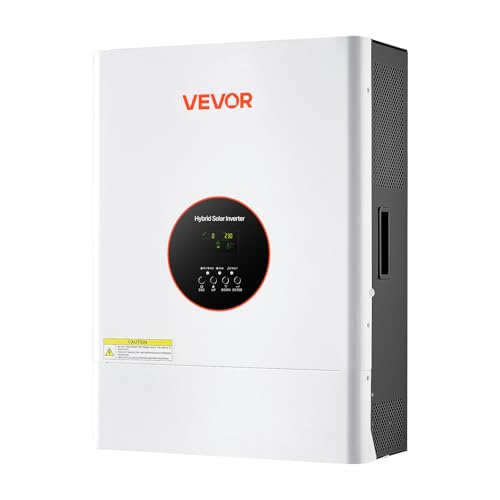
The VEVOR unit combines an inverter and charge controller into one low-frequency module. It provides 6400W of continuous output with dual-voltage 110–120V and 220–240V split-phase capability, making it suitable for heavy-duty appliances and shop equipment. The built-in MPPT controller enhances solar harvest, promoting higher daily energy yield. Best for off-grid homes or cabins with moderate-to-high energy needs where a single, robust unit is preferred.
Who it’s best for: Homeowners or small workshops needing reliable split-phase power with solid solar charging. Why selected: Its all-in-one design reduces wiring complexity and offers efficient energy conversion.
Caution: As a lower-profile storage option, verify battery compatibility and ensure your PV array matches the MPPT input range for optimal performance.
6500W Hybrid Solar Inverter 48V (Anjfylque)

This all-in-one inverter features two MPPT controllers, an LCD interface, and optional WiFi/GPRS remote monitoring. With a maximum PV input around 4500W per channel and a configurable max charge current up to 150A, it supports both battery operation and direct PV-to-load operation without a battery. Best for households needing flexible charging modes and remote monitoring.
Who it’s best for: Users who want multiple output modes and the option to run loads directly from PV or grid, with battery backup as desired. Why selected: Strong MPPT capability and battery-flexible operation address variable solar conditions.
Caution: Some configurations require careful setup to balance PV input and battery charging without overloading the system.
Aninerel 12000W Solar Hybrid Inverter

This 12kW unit delivers 120V single-phase or 240V split-phase output and supports parallel expansion up to six units, providing up to 72kW total when combined. It features two MPPT controllers and a broad PV input range. Best for large off-grid homes, workshops, or cabins that require scalable power and robust solar charging. Why selected: High expandability and strong solar harvesting enable sizable energy systems.
Who it’s best for: Large property owners needing scalable power with parallel stacking. Why chosen: The parallel capability dramatically increases total output, supporting growing energy needs.
Caution: Parallel setups require proper bus bars and protective equipment to manage high combined outputs safely.
Ampinvt 6000W Peak 18000W (Off-Grid)

This inverter provides a high peak surge of 18kW with a continuous 6kW output, split-phase 120V/240V, and a built-in battery charger. It supports adjustable charging currents up to 35A and is compatible with multiple battery types. Best for off-grid homes that require robust surge handling and flexible charging. Why selected: Strong inverter performance with adaptable charging control makes it versatile for varied battery chemistries.
Who it’s best for: Off-grid setups with high surge demands and a need to tailor charging to battery type. Why chosen: Versatile battery compatibility and adjustable charge current offer practical customization.
Caution: Ensure battery charger settings align with your battery’s specifications to prevent overload during charging.
SUNGOLDPOWER 10000W 48V Solar Inverter

This 10 kW inverter includes two MPPT controllers, built-in WiFi, and a dual set of charging options with up to 200A battery charging. It supports split-phase output and offers four charging/output modes, including Solar Priority and Utility Priority. Best for tech-savvy users who want remote monitoring and multiple charging strategies. Why selected: Integrated WiFi and multiple modes provide flexible energy management and monitoring convenience.
Who it’s best for: Homeowners or small businesses wanting smart monitoring and adaptable charging priorities. Why chosen: WiFi connectivity and feature-rich modes enable easier energy optimization and troubleshooting.
Caution: WiFi-enabled features may require network access for full functionality; ensure security settings are configured properly.
AMPINVT Off Grid Inverter Charger 5000W

This unit combines an inverter, battery charger, and AC auto-transfer switch with over 90% transfer efficiency. It supports multiple battery types and offers adjustable charging currents up to 35A. Best for budget-conscious buyers needing reliable pure sine wave output and flexible battery compatibility. Why selected: Solid all-in-one solution for mid-range off-grid systems with diverse battery options.
Who it’s best for: Budget-minded off-grid users who want a dependable inverter-charger with broad battery support. Why chosen: The combination of performance and battery flexibility provides practical value.
Caution: Be mindful of battery type settings to ensure proper compatibility and charging performance.
Buying Guide: Split-Phase Inverter Chargers
- What you need: Determine your total continuous load, surge requirements, and whether you will run appliances directly from PV, the grid, or battery back-up. High-surge devices like air conditioners and welders require larger inverter ratings.
- Battery compatibility: Check the supported chemistries (lead-acid, Li-ion, LiFePO4) and the charging current range. If you plan to expand batteries later, choose units with higher charging capabilities and parallel-ready designs.
- MPPT and solar input: Look for multiple MPPT channels and a wide PV input voltage range. More MPPTs improve harvest under variable sunlight and shading.
- Expandability: If future growth is likely, prioritize units that allow parallel connections and scalable output, especially for larger homes or workshops.
- Monitoring and control: Consider WiFi/GPRS remote monitoring and the availability of mobile apps. This helps optimize charging strategies and diagnose issues remotely.
- Installation considerations: Ensure your system is designed to balance loads across phases, with proper cabling and protective devices. Split-phase configurations provide 120V and 240V outputs for different appliances.
FAQ
- What is a split-phase inverter charger? A device that inverts DC battery or PV power to 120V/240V AC split-phase output while charging the battery from PV or AC power, often with multiple MPPTs and parallel expansion.
- Can I run an off-grid system without batteries using these units? Some models support no-battery operation by directly drawing from PV or the grid, but operation without a storage buffer limits reliability during outages.
- Is WiFi monitoring essential? It’s optional; WiFi enables remote status checks and parameter adjustments, but many units also offer local LCD interfaces.
- How many units can I parallel? Many models support 2–6 units in parallel, enabling higher total output for larger homes or businesses. Check the manufacturer’s parallel guidelines.
- What battery types are supported? Look for compatibility with SLA, AGM, GEL, Li-ion, and LiFePO4. Correct battery type settings optimize charging and longevity.
- Do these inverters work with grid-tied systems? Some support hybrid modes that allow grid interaction with anti-backfeed or utility priority configurations. Verify local regulations before connecting.