Best Emergency Backup Power Supply for Home and Travel
When outages threaten essential needs, a reliable emergency backup power supply is essential. This guide highlights five strong options for different lifestyles—home, healthcare needs, small offices, and outdoor activities. Each choice is described with its best use case, clear pros, and a practical caveat to consider before buying.
| Product | Best For | Key Benefit | Limitations |
|---|---|---|---|
| Blackout Buddy 1030Wh Emergency Power Supply | Home fridge, meds, and critical devices | Automatic power transfer with a long fridge cycling window | Higher upfront size and weight |
| CyberPower ST425 Standby UPS | Home office and small setups | Multiple outlets with surge protection | Smaller capacity; limited runtime for high loads |
| EnginStar Portable Power Station 300W | Outdoor, camping, CPAP backup | Dual 110V outlets and multiport charging | Moderate capacity for larger appliances |
| APC BE600M1 UPS | Computers and Wi‑Fi during outages | Compact and reliable for desk setups | Limited runtime at higher loads |
| GOLDENMATE 1000VA/800W LiFePO4 UPS | Home office and network gear | Eight outlets with LiFePO4 long life | Higher price tier |
Blackout Buddy 1030Wh Emergency Power Supply
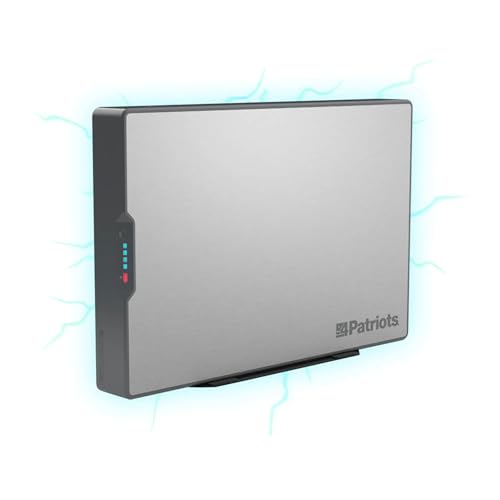
The Blackout Buddy is designed for automatic, hands-off operation during grid failures. It uses Pass-Through Technology to switch from wall power to battery power within 20 milliseconds, without user input. This makes it well suited for households that want uninterrupted refrigeration, essential medical devices, and streaming infrastructure during outages. It can power a standard refrigerator for up to 34 hours in cycling mode and can support a CPAP machine, router, and lights within device wattage limits. The LiFePO4 battery is rated for thousands of cycles and indoor-safe operation, with a slim 2.5-inch profile for easier placement. Best for users who need a robust backup that activates automatically and integrates into daily life without manual control. A potential limitation is that total runtime depends on the connected load, so larger appliances may reduce continuous runtime expectations.
Who this is best for: households prioritizing automatic transfer, critical items like meds or breast milk, and those who want a compact, safer LiFePO4 solution for indoor use.
Why chosen: It combines automatic switching, a substantial energy reserve, and a thin enclosure ideal for tight spaces. The long cycle life reduces replacement costs over time, and the indoor-safety profile minimizes health concerns in sleeping areas or near children and pets.
One caution: Be mindful of device wattage limits. Heavier loads (e.g., high-power freezers or multiple high-draw appliances) may approach the system’s sustained capacity; plan loads accordingly to maximize runtime.
CyberPower ST425 Standby UPS

The CyberPower ST425 is a compact standby UPS designed to protect a home office and entertainment setup. It provides 425VA/260W of simulated sine wave output and eight outlets—four with battery backup and surge protection, four with surge protection only. Its simple design makes it a good fit for computers, printers, routers, and gaming consoles when grid power falters. It’s best for users seeking a reliable, plug-and-play backup with clear status indicators and multiple outlets in a single surge-protected bundle. A limitation is the modest capacity, which means longer outages or multiple high-power devices can reduce available runtime.
Who this is best for: small home offices, streaming setups, and households needing a straightforward, low-maintenance backup system.
Why chosen: The eight-outlet layout and battery-backed protection help keep essential devices online during short outages. It’s a good option for preserving connectivity and productivity without complex configurations.
One caution: It may not handle extended outages with heavy loads without planning for additional power support or load shedding.
EnginStar Portable Power Station 300W

The EnginStar portable power station targets outdoor and emergency use with a 296Wh battery and two 110V pure sine wave outlets. Its compact size and 6.5-pound weight offer easy transport for camping trips, clinics, or home backup for devices like CPAP machines and routers. It includes multiple output ports (AC, DC, USB) to charge several devices at once, plus a safety-focused battery management system. Best for users needing a reliable, portable energy source that can run essential electronics remotely. A potential limitation is the total runtime under high-wattage loads, which may be shorter than larger generators.
Who this is best for: campers, travelers, and families needing a portable AC power option for light appliances and chargers.
Why chosen: It balances portability with practical capacity, offering multiple outputs and a robust safety system for trusted performance in outdoors or during emergencies.
One caution: It’s typically not meant for heavy, continuous power like full-size refrigerators or power tools for extended periods.
GOLDENMATE 1000VA/800W LiFePO4 UPS

The GOLDENMATE unit uses LiFePO4 chemistry for extended life and reliability, featuring eight NEMA 5-15P outlets with both surge protection and battery backup. The UPS operates with a built-in Battery Management System and cooling to maintain performance under load. Its sine wave output is suitable for computers, network gear, and other electronics sensitive to power fluctuations. This option is best for users who want a higher‑capacity, feature-rich UPS with long battery life. A potential limitation is the higher initial cost compared to smaller, lead-acid backups.
Who this is best for: home offices, small workstations, and network setups needing robust protection and multiple outlets.
Why chosen: The LiFePO4 chemistry and long operational life deliver a durable, low-maintenance solution for critical devices.
One caution: Verify total load to ensure eight outlets can be utilized without overloading the system during simultaneous device use.
Buying Guide
What should you consider when selecting an emergency backup power supply?
- Power capacity and runtime: Assess the total wattage of devices you want to back up and estimate runtime at that load. Higher capacity units deliver longer operation for refrigerators or CPAP machines.
- Type of use: Do you need automatic transfer (no manual intervention) or a manual backup system you switch on when needed? Auto-transfer reduces the risk of forgetting to power devices.
- Portability vs. capacity: Portable units suit outdoor or travel scenarios, while wall- or desk-based UPS systems suit home offices and gaming setups.
- Battery chemistry: LiFePO4 (LFP) offers longer life, safer operation, and more cycles than some lead-acid options. It’s a good fit for indoor use near sleeping areas.
- Outlets and power distribution: Count the number of outlets and whether you need both backup and surge-only outlets. Transformer spacing can matter for bulky plugs.
- Safety features: Look for overcharge protection, temperature management, and a built-in BMS for longevity and stability.
- Maintenance and lifecycle costs: Consider expected cycle life, replacement costs, and the unit’s overall long-term value.
Frequently Asked Questions
- What is an emergency backup power supply? It is a device that provides stored electrical power to connected devices during a power outage, either automatically or when activated.
- Which type of battery is best for indoor home use? LiFePO4 (LFP) batteries are favored for indoor use due to safety, long life, and cycling capability.
- Do these devices power refrigerators and medical devices? Some models are designed to support refrigerators, CPAP machines, and routers, but always verify device wattage and runtime.
- Can I run high-wattage appliances with these supplies? Most compact units are best for small electronics and essential devices; run-time and capability depend on the specific unit’s capacity.
- Is automatic transfer better than manual backups? Automatic transfer reduces risk of outage-caused shutdowns and ensures continuity for time-sensitive devices.
- How do I determine which product is right for me? Consider your load, desired runtime, portability needs, and whether you require multiple outlets or longer life cycles.