Best Home Backup Generators for Propane Power in a Power Outage
When outages strike, having a reliable propane-powered backup generator can keep essentials running without the noise or complexity of larger installed systems. This guide highlights five versatile models designed to power homes during emergencies, with a focus on dual-fuel capability, remote start options, and transfer-switch readiness. Each option below offers solid performance, safety features, and practical run times to help you compare effectively.
| Product | Brand | Fuel Type | |
|---|---|---|---|
| Westinghouse 12500 Watt Dual Fuel | Westinghouse Store | Gas/Propane | Remote start, transfer switch ready |
| Westinghouse 14500 Peak Watt Tri-Fuel | Westinghouse Store | Gas/Propane/Natural Gas | Tri-fuel versatility, long runtime |
| A-iPower 4600W RV-Ready | A-iPower Store | Gas | Ultra-lightweight, CO sensor |
| WEN 4750W Dual Fuel | WEN Store | Gas/Propane | Dual fuel with 120V/240V transfer capability |
| Westinghouse 6500 Watt Dual Fuel | Westinghouse Store | Gas/Propane | Transfer switch ready, CO sensor |
Note: The selections emphasize propane capability and transfer-switch readiness for easy integration with home electrical systems. Each model listed offers a balance of power, portability, and safety features suitable for residential use in the United States.
Westinghouse 12500 Watt Dual Fuel Powerhouse

The Westinghouse 12500 Watt Dual Fuel generator runs on gasoline or propane and includes a remote start feature via a key fob. It is transfer switch ready and ships with safety outlets that include rubber covers for weather protection. The unit employs a 457cc Westinghouse 4-stroke engine with a digital hour meter and an automatic low-oil shutdown to protect the engine during extended outages. Real-time power output is monitored via a VFT display, showing voltage, frequency, and lifetime hours.
Westinghouse 14500 Peak Watt Tri-Fuel Advantage

Designed for larger homes or robust portable power, this tri-fuel generator covers gasoline, propane, and natural gas. It delivers up to 11,500 running watts on gasoline and up to 13,500 peak watts on propane, with substantial runtime on its 9.5 gallon tank. A durable 550cc Westinghouse OHV engine powers the unit, making it a strong option for extended outages and demanding electronics.
A-iPower 4600W RV-Ready Inverter
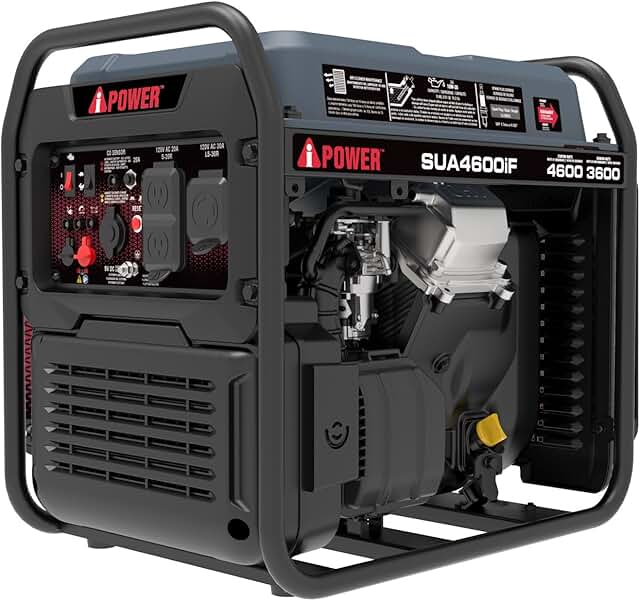
Compact and portable, the A-iPower 4600W model provides 4600 starting watts and 3600 running watts with a 149cc engine. It is designed for RVs and home backup, balancing weight (56 lbs) with inverter-grade clean power suitable for sensitive electronics. The unit includes a CO sensor for improved safety during operation in enclosed spaces or near living areas.
WEN 4,750-Watt Dual Fuel Portable

WEN offers a versatile 4,750-watt dual fuel generator with 120V/240V output options. The unit supports a simple fuel switch between gasoline and propane and is designed with portability in mind, including a wheel kit for easier movement during setup and outages. The 224cc engine is paired with an electric start for quick engagement when power is needed most.
Westinghouse 6500 Watt Dual Fuel

With 5300 running watts and 6500 peak watts on gasoline and 4800 running watts and 5800 peak watts on propane, this unit provides substantial resilience for mid-sized homes. A 4.7-gallon fuel tank offers extended runtimes, and a 120/240V transfer switch-ready configuration supports integration with home electrical systems. The model also includes an RV-ready outlet and a CO sensor to enhance safety during operation.
Buying Guide
- Power needs: Assess your essential circuits and total wattage to choose a generator with adequate running watts and peak watts for surge loads like refrigerators, sump pumps, and HVAC.
- Fuel flexibility: Dual-fuel or tri-fuel models offer propane as a stable, long-term option and can switch to gasoline or natural gas, increasing reliability during extended outages.
- Transfer switch readiness: A transfer-switch-ready unit simplifies installation with your home’s electrical panel, enabling seamless switching during outages.
- Starting method: Remote/electric start is convenient in bad weather or when the unit is placed near the home; recoil start remains a reliable backup.
- Run time and fuel tank: Larger tanks extend operation between refuels. Consider run-time expectations at typical loads to avoid frequent refueling.
- Safety features: Look for CO sensors, rubber outlet covers, and automatic low-oil shutdown to protect both the generator and household devices.
- Portability vs. stationary setup: Portable models are easier to move and store; however, permanently installed systems with transfer switches provide faster, safer restoration of power to critical circuits.
- Noise considerations: Inverter-based models often run more quietly and provide cleaner power for sensitive electronics, a practical factor for residential settings.
- Maintenance and warranty: Check oil change intervals, filter access, and warranty terms to minimize long-term ownership costs.