Best Deep Cycle Batteries for RV, Solar and Off-Grid Power
Choosing the right deep cycle battery is essential for reliable power in RVs, boats, off-grid cabins, and solar setups. This guide highlights five top-performing options, comparing chemistry, capacity, cycle life, and ideal use cases. Each pick is aligned with common deep cycle needs—steady discharge, maintenance requirements, and safety for long-term power. Read on to find the best match for your energy goals and budget.
Summary of selected products:
| Product | Type | Voltage / Capacity | Best For | Approximate Weight |
|---|---|---|---|---|
| Weize Deep Cycle AGM 12V 100Ah | AGM Lead-Acid | 12V, 100Ah | RV, Marine, Solar, Trolling Motors | ~26 lb |
| US Battery US2200 XC2 (4 Pack) | Golf Cart Deep Cycle | 6V, 232Ah each | Built-in GC2 golf-carts and higher-capacity bank setups | ~40 lb per battery |
| Trojan T-105 6V Deep Cycle (Set of 4) | Flooded Lead-Acid | 6V, 225Ah | Heavy-duty off-grid and RV systems | ~60 lb per battery |
| Renogy Deep Cycle AGM 12V 100Ah | AGM Lead-Acid | 12V, 100Ah | RV, Cabin, Marine, Off-Grid | ~24 lb |
| ECOBOSS 12V 100Ah LiFePO4 Group 31 | LiFePO4 | 12V, 100Ah | Long life, portable power, cold-weather use | ~25 lb |
Weize 12V 100Ah AGM Deep Cycle Battery
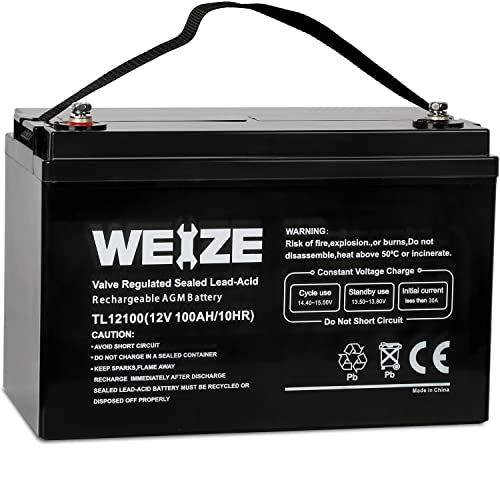
The Weize 12V 100Ah AGM battery uses Absorbent Glass Mat technology to minimize acid leakage and reduce maintenance. Its sealed design makes it a practical choice for RVs, boats, and off-grid systems where space and safety are priorities. The battery’s compact dimensions support easy installation in tight spaces. With a low monthly self-discharge rate, it stays ready for longer periods between uses, provided charging and storage conditions stay within recommended temperatures.
Key features include a 1100A max discharge current for brief high-demand events and a wide operating temperature range suitable for variable climates. Weize emphasizes a maintenance-free, reliable power source that can serve as a solid base in a mixed battery bank or as a primary power pack for small solar setups.
Use case notes: ideal for campers, trolling motors, and caravans where a robust, ready-to-use 100Ah pack is valuable. Ensure proper ventilation and avoid deep cycling beyond recommended levels to maximize lifespan. The left/right terminal layout is clearly marked for straightforward wiring.
US Battery US2200 XC2 6V Deep Cycle (4 Pack)

This pack of four 6V batteries delivers a combined 232Ah per battery, using a GC2 group size. The molded-in UTL terminal design supports straightforward parallel and series configurations for versatile bank builds. As a replacement for Trojan T-105 GC2 setups, these batteries are well-suited for high-use RVs and off-grid trailers that demand consistent, long-duration power with reliable cycling performance.
Considerations include the need for proper venting and maintenance of electrolyte levels, as these are flooded lead-acid cells. The polypropylene case offers durable resistance to impact and weather exposure, making them a solid choice for remote installations where service access is limited.
Trojan T-105 6V Deep Cycle (Set of 4)

The Trojan T-105 is a traditional flooded lead-acid deep cycle option known for reliability in demanding environments. Each 6V battery delivers 225Ah at the 20-hour rate, with a GC2 footprint that makes it easy to wire into larger banks for extended power. The set of four provides a robust platform for off-grid cabins, boat power systems, and large RV installations requiring long run times between charges.
Important operating notes include water maintenance for flooded cells, proper ventilation, and periodic equalization charges to maximize lifespan. While heavier than AGM options, the Trojan T-105 remains a stalwart for users who prioritize proven durability and a track record in rugged applications.
Renogy 12V 100Ah AGM Deep Cycle Battery

Renogy’s 12V 100Ah AGM battery is a widely trusted option with strong safety characteristics and minimal maintenance. It supports series (no limit), and parallel connections up to four in parallel, enabling scalable power banks for larger systems. The internal design emphasizes chemical stability and a sealed structure to reduce user troubleshooting needs compared with other chemistries.
Renogy’s battery is known for its safety profile and steady performance in varied temperatures. For users adding a bank to a solar array, this unit offers predictable discharge curves and reliable cycling that’s suitable for both RVs and off-grid cabins. While heavier than some AGM competitors, it offers a balanced mix of reliability, safety, and installability.
ECOBOSS 12V 100Ah LiFePO4 Group 31

This ECOBOSS LiFePO4 battery uses a durable Group 31 form factor and a 120A smart BMS to safeguard against overcharge, over-discharge, short circuits, and heat. With up to 15,000 cycles, it promises a much longer lifespan than lead-acid competitors, translating to fewer replacements and longer runtimes in RVs, boats, and off-grid installations. It weighs substantially less than equivalent lead-acid packs, improving handling and mounting options.
Low-temperature protection helps maintain safe charging in cold climates, and the flat discharge curve maximizes usable capacity. For users prioritizing longevity, weight savings, and robust cold-weather performance, this LiFePO4 option is a compelling choice for critical systems like trolling motors and cabin power. Consider the higher upfront cost balanced against decades of service life and stable performance.
Buying Guide: Key Considerations For Deep Cycle Batteries
- Chemistry and lifecycle: AGM and flooded lead-acid offer lower upfront costs but shorter lifespans than LiFePO4. LiFePO4 provides thousands of cycles, lighter weight, and better cold-weather behavior, at a higher initial price.
- Voltage and capacity: Determine the system’s total energy needs (Ah) at your discharge rate (C20, C25, etc.). For multi-battery banks, plan in series or parallel configurations to achieve the desired voltage and capacity.
- Weight and size: Heavier flooded lead-acid packs require sturdy mounting and can impact vehicle or vessel handling. LiFePO4 options are lighter and easier to transport but can be more costly.
- Maintenance and safety: AGM and LiFePO4 are maintenance-lite or maintenance-free. Flooded lead-acid requires water top-ups and venting. Sealed designs reduce venting concerns and acid exposure.
- Temperature effects: Battery performance and life are temperature-dependent. Some models specify optimal charging ranges and cold-weather protections—critical for RVs and boats in variable climates.
- Charging compatibility: Ensure your charger, solar controller, or inverter supports your chosen chemistry. LiFePO4 often requires specific BMS management and charging profiles.
- Durability and warranties: Look for manufacturers offering long warranties and documented cycle life. AGM and LiFePO4 batteries typically provide better warranties for high-use applications.
- System integration: If replacing multiple components, verify form factor compatibility (Group 31, GC2, etc.), terminal types, and bank wiring options to simplify installation.
Across these options, users should balance initial cost against long-term reliability and maintenance needs. For frequent deep cycles and cold-weather environments, LiFePO4 models may offer the best value over time. For straightforward, lower-cost deployments in controlled settings, AGM and flooded lead-acid remain viable choices with mature ecosystems and readily available replacement parts.