Best Speed Controllers for 24V DC Motors for Smooth, Reliable Performance
Choosing the right speed controller for a 24V DC motor can improve control, efficiency, and motor longevity. This guide highlights five top options with robust voltage ranges, current capacity, and safety features to help you pick the best fit for robotics, automation, or DIY projects. Each pick is evaluated for compatibility with 24V systems, ease of use, and durability in real-world operation.
| Product | Voltage Range | Max Current | |
|---|---|---|---|
| RioRand Small PWM DC Motor Speed Controller (6-28V, 3A) | 6-28V | 3A | Forward/Reverse, compact design |
| SDRGEEK DC Motor Speed Controller (9-60V, 20A) | 9-60V | 20A | Wide range, high current, durable |
| RioRand 7-70V PWM DC Motor Speed Controller (30A) | 7-70V | 30A | High current, on-board run/stop/brake |
| Enmja PWM Motor Speed Controller (7-70V, 30A) | 7-70V | 30A | Wide duty-cycle range, low-noise operation |
| PEMENOL PWM Motor Driver (5-24V, 15A) | 5-24V | 15A | Power-off memory, soft start |
Below are five carefully chosen options that balance voltage tolerance, current capability, and practical features for 24V motor setups. Each entry includes installation notes and what to consider when integrating with your system.
Note: All products listed are DC motor speed controllers or driver modules designed for DC motors. Do not connect these devices directly to 220V AC mains. Use a matching DC power supply and observe correct polarity when wiring.
Summary Reference: The selected controllers cover a range from compact, low-current units suitable for small actuators to high-current modules capable of driving larger 24V motors in longer-duty applications. Consider the motor’s stall current, required control resolution, enclosure needs, and whether you need features like soft start, braking, or external switch control when making a choice.
RioRand Small PWM DC Motor Speed Controller

The RioRand unit operates over a 6-28V DC input with a maximum continuous output current of 3A and up to 80W. It supports forward and reverse motor control via a potentiometer with an integrated switch. The design uses silicone-insulated wire for heat resistance, suitable for compact 24V motor applications that do not exceed current limits. This controller is ideal for small gear motors and compact robotics projects where space is limited and a simple control interface is preferred.
Considerations: The 3A current ceiling means it’s best for smaller 24V motors or testing benches. Ensure your motor’s stall and running current stay within the controller’s safe range. The included switch adds convenient on/off and directional control without needing extra wiring.
SDRGEEK DC Motor Speed Controller

This driver supports a broad voltage span from 9 to 60V and delivers up to 20A continuously, enabling up to 1200W of driving power. It is suitable for brush motors in a variety of DC applications, including 24V systems requiring stronger torque control. The board is designed for steady operation and offers clockwise and counterclockwise rotation control via a user-accessible potentiometer.
Considerations: While powerful, this module is not intended for electric vehicles. Ensure your supply can sustain 20A and that wiring harnesses match the current draw. The larger current capability makes it a safer choice for mid-size 24V motors or those with higher stall currents.
RioRand 7-70V PWM DC Motor Speed Controller

This high-current controller accommodates a wide 7-70V input with a robust 30A output and an onboard run/stop/brake function. The soft-line potentiometer is adjustable and can be separated from the board via a 15 cm lead, aiding flexible installations. It is designed for long-term operation with a stable control circuit, suitable for 24V motors with higher torque demands or where precise stopping and braking are required.
Considerations: Confirm that the motor’s current draw does not exceed 30A and that your power source provides adequate current. This module is not for brushless motors and requires a dedicated DC supply for the controller.
Enmja PWM Motor Speed Controller

The Enmja controller covers 7-70V input with a maximum 30A output, designed to drive a wide array of DC motors. It offers a broad duty-cycle range for smooth speed regulation and features a stable circuit with minimal noise and vibration. It also includes a power indicator and a durable build intended for extended use in 24V applications.
Considerations: Ensure the wiring polarity is correct and that your motor’s current profile remains within the 30A limit. The unit is well-suited for projects that require low-noise operation and strong performance at 24V or higher.
PEMENOL PWM Motor Driver
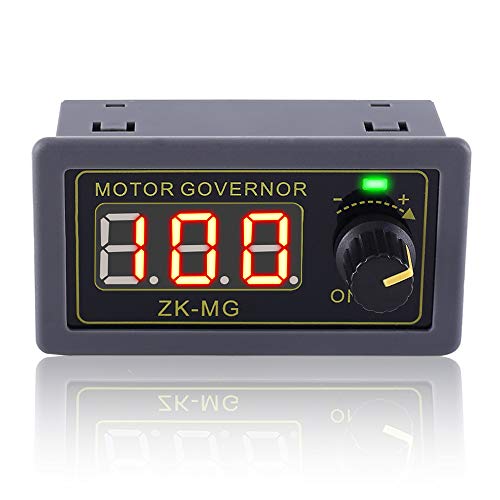
PEMENOL offers a 5-24V input range with up to 15A continuous current and up to 150W of output power. Notable features include a power-off memory function to preserve settings, a soft-start mechanism to minimize motor stress, and a start-stop control option with an external switch. This combination makes it a flexible option for compact 24V motor systems that benefit from controlled ramping and quick manual control.
Considerations: Verify the motor’s current draw and ensure proper wiring polarity to avoid short circuits. The memory and soft-start features are advantageous for repeated operation in automation or robotics tasks.
Buying Guide: Key Purchase Considerations For 24V DC Motor Controllers
- Voltage range compatibility: Match the controller’s minimum/maximum input to your supply and motor. For 24V systems, a broad range (7-70V or 9-60V) provides flexibility for future projects.
- Current capacity: Determine motor stall current and running current. Choose a controller with a comfortable margin above peak current to avoid overheating or triggering protection.
- Control features: Decide between fixed or adjustable speed, presence of reverse/brake options, soft-start, and memory functions. External control options (buttons or switches) can simplify integration.
- Wiring and installation: Look at wire gauge, lead length, and whether the device requires a separate power supply for controller operation. Separation of control and motor power helped in reducing noise and interference.
- Durability and heat management: Consider heat sinks, enclosure compatibility, and the physical robustness of the controller for your environment (indoor, automotive, or outdoor use).
- Noise and vibration: Controllers with stabilized duty cycles and well-engineered circuitry reduce motor vibration, improving precision in positioning or automation tasks.
- Safety and protection: Fuses, braking functionality, and short-circuit protection help protect both motor and driver, extending system life.
- Application fit: For small hobby motors, compact, low-current controllers are adequate. For robotics or automation with higher torque needs, opt for high-current modules with wide voltage ranges.
- Compatibility with brush motors: Most units are designed for brushed DC motors. Verify that your motor type matches the controller specifications before purchasing.