Best Emergency Backup Power for Homes: Reliable Portable Generators for Outages
Home power outages demand reliable, portable energy solutions. This guide highlights top five emergency backup power options that balance capacity, weight, and charging versatility. Whether you’re prepping for storms, blackouts, or off-grid living, these units support essential devices while keeping you flexible with multiple charging methods and fast recharges.
| Product | Capacity | Weight | Best For |
|---|---|---|---|
| Jackery Explorer 300 | 293Wh | 7.1 lb | Compact back-up for essential devices |
| BLUETTI Elite 30 V2 | 288Wh | 9.4 lb | Budget-friendly, versatile power |
| Anker SOLIX C1000 Gen 2 | 1024Wh | ~26 lb | High-output, fast recharge |
| Jackery Explorer 2000 v2 | 2042Wh | ~39.5 lb | Large home backup, heavy-use |
| yewpiny EM300 | 259Wh | ~6.5 lb | Ultra-portable, solar-ready |
Selected models emphasize safe power, multiple outputs, and practical charging options, with an emphasis on American users seeking dependable, portable energy for homes, camps, and mobile living. Each entry below includes a brief overview, key outputs, and how it fits into a home backup strategy.
Jackery Explorer 300: Compact 293Wh Power
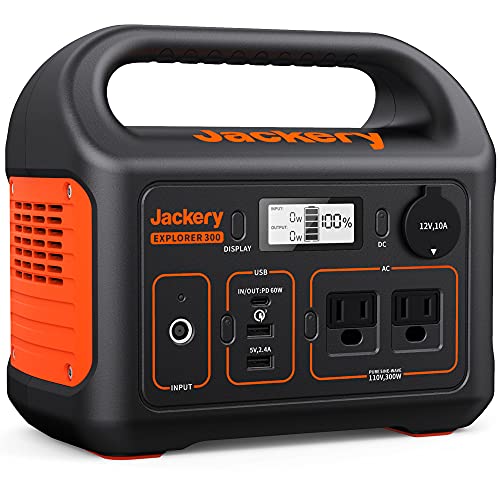
The Explorer 300 combines a 293Wh lithium-ion battery with two pure sine wave AC outlets and multiple ports, enabling safe operation of essential devices during a blackout. With a weight of about 7.1 pounds, it’s highly portable for quick-moving needs around the home or campsite. Recharging is fast via wall outlet, 60W USB-C, or even car and solar options when available. It can support up to six devices simultaneously, including cameras, laptops, drones, and more, making it a practical everyday carry for power interruptions.
BLUETTI Elite 30 V2: Balanced Power

The BLUETTI Elite 30 V2 offers 288Wh with a compact 9.4 lb frame, designed for portability while delivering 600W continuous and up to 1500W surge power in Power Lifting Mode. This makes it capable of running essential home loads during storms or outages. A smart cooling system and UltraCell technology help reduce standby and running power consumption, extending runtime for lights, routers, monitors, and small appliances. It’s a strong mid-range option for home and travel alike.
Anker SOLIX C1000 Gen 2: High-Capacity Power

Anker’s SOLIX C1000 Gen 2 delivers 1,024Wh with up to 2,000W output (3,000W peak) and rapid recharge features, including UltraFast charging in the field. Its substantial capacity supports longer outages in homes with multiple devices. The Gen 2 model emphasizes portability—14% smaller and 11% lighter than competing 2kWh units—while offering a wide port selection that includes USB-C PD and multiple AC outlets, ideal for power outages, remote work setups, and off-grid living.
Jackery Explorer 2000 v2: Heavy-Duty Home Backup

The Explorer 2000 v2 is a high-capacity option with 2,042Wh and multiple AC outputs totaling 2,200W, suitable for larger home backup needs and outdoor use. It includes a USB-C PD 100W port for fast charging of laptops and devices. The unit is designed for long-term resilience with LiFePO4 chemistry and a household-grade energy supply, supporting emergency readiness for extended outages, camping trips, or small business continuity scenarios. It remains prioritizable for users who require substantial sustained power.
yewpiny EM300: Ultra-Portable Solar Ready
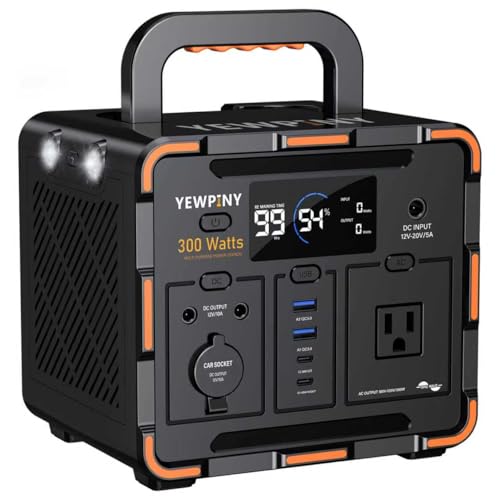
The EM300 packs 259Wh in a compact form with 6.5 x 4.6 x 3.1-inch dimensions and roughly 6.5 pounds. It includes a 65W USB-C PD and multiple USB-A and DC outputs, plus two AC outlets for small home appliances. Its LiFePO4 battery offers long cycle life, making it suitable for quick outages, travel, and light home backup. Solar readiness allows recharging with compatible panels when sunlight is available, adding flexibility for off-grid scenarios.
Buying Guide: Key Purchase Considerations
- Power needs: Start by listing essential devices and estimating total wattage. Choose a unit whose continuous rating comfortably covers those loads, with some surge headroom for startup devices like routers or fans.
- Battery chemistry: LiFePO4 offers longer cycle life and stability, at a higher upfront cost, versus traditional lithium-ion. For long-term backup, LiFePO4 is often preferable.
- Output options: Look for multiple AC outlets, USB-C PD (preferably 60W or higher), USB-A, car ports, and DC outputs. A mix supports more devices and charging configurations.
- Charging versatility: Solar input compatibility, car charging, and fast wall charging reduce downtime. PD charging speeds (60W or more) significantly shorten recharge cycles.
- Weight and size: Heavier models provide more capacity; lighter units improve portability but may offer less runtime. Balance weight with intended use (home backup vs. portable camping).
- Durability and safety: Overload protection, short-circuit safeguards, and efficient cooling extend life in adverse weather. Check BMS features and warranty terms for long-term security.
- Future-proofing: If you anticipate expanding needs, consider higher-capacity models or devices that scale with solar panel additions and additional batteries.
Bottom line: For compact, reliable emergency backup power, the Jackery Explorer 300 and yewpiny EM300 offer portability and core capabilities. The BLUETTI Elite 30 V2 and Anker SOLIX C1000 Gen 2 provide higher output with robust charging ecosystems. For significant home backup needs and extended outages, the Jackery Explorer 2000 v2 delivers substantial capacity with fast charging options. Each choice supports different usage patterns; select based on load size, mobility, and integration with solar charging to ensure dependable home energy during storms or outages.