Best Dry Block Temperature Calibrators for Precision and Reliability
Dry block temperature calibrators are essential tools for laboratories and field technicians who need consistent, high-accuracy temperature references. This guide highlights five top options that balance performance, portability, and durability for American users. Each entry includes key features to help you compare capabilities and suitability for your calibration needs.
Summary of selected products
| Product | Brand | Key Feature |
|---|---|---|
| CEM T.ax Included Dry Block Calibration BX150 | CEM | High-temperature range with handheld design |
| Fluke Calibration 9100S-B-156 HDRC | Fluke | Portable dry-well with RS-232 interface |
| Fluke Calibration 9100S-A-156 | Fluke | Ultra-portable dry-well, lightweight design |
| Fluke Calibration 9100S-D-156 HDRC | Fluke | Compact handheld with modern interface |
| Fluke Calibration 9009-B-156 Industrial Dual-Block | Fluke | Dual-block for simultaneous calibrations |
CEM T.ax Included Dry Block Calibration BX150 Handheld Dry-Well Hi-Temperature Calibrator
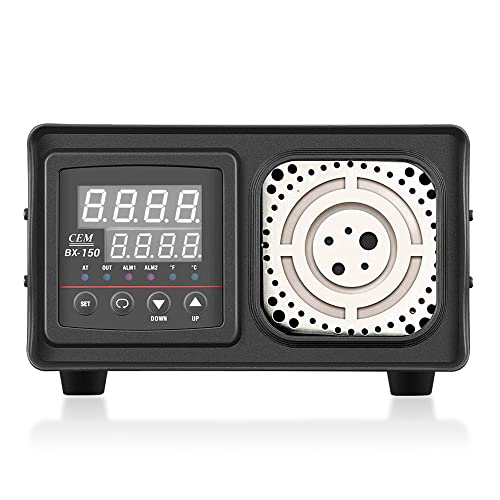
The BX150 is designed for high-temperature calibration using a handheld dry block. It covers a broad range from 33°C to 300°C (91.4°F to 572°F), enabling precise reference checks across common industrial temperatures. Cautions emphasize hot-probe handling and heat-resistant surfaces to prevent personal injury and equipment damage. The unit is intended for dry-block operation with strict guidelines to avoid liquids in the block holes. This model is suitable for technicians needing a portable, high-temperature dry-well option with safety considerations clearly outlined.
Fluke Calibration 9100S-B-156 HDRC Handheld Dry-Well Hi-Temperature Calibrator

Fluke’s 9100S-B-156 HDRC stands out for its portability and software compatibility, including an RS-232 interface and 9930 Interface-it v3.81 software. It is marketed as one of the world’s smallest and lightest dry-wells with a robust build, making it ideal for field calibration and workshop use where space and weight matter. The 35–375°C range covers common calibration needs, while software support helps integrate history logs and test results into existing workflows.
Fluke Calibration 9100S-A-156 Dry-Well Hi-Temp, Block A
Fluke’s 9100S-A-156 emphasizes portability and ease of use with its world-renowned compact design. This model is described as the smallest and lightest dry-well option, designed in the United States with a focus on user-friendly operation for technicians who perform routine calibrations across varied environments. The Block A configuration supports precise calibrations within the cited temperature range and is valued for its travel-friendly form factor.
Fluke Calibration 9100S-D-156 HDRC Handheld Hi-Temperature Calibrator
The 9100S-D-156 HDRC offers a compact handheld dry-well option with advancements aligned to modern calibration workflows. It emphasizes portability and includes RS-232 interface compatibility along with the “World’s smallest, lightest” designation in its category. The device supports 35 to 375°C temperature ranges, making it suitable for service technicians who require quick, reliable reference checks on-site or in workshops.
Fluke Calibration 9009-B-156 Industrial Dual-Block Thermometer Dry-Well Calibrator

The 9009-B-156 delivers a dual-block solution, enabling simultaneous comparison calibrations across two wells. It encompasses a broad temperature span from –15°C to 350°C, suited for mixed thermal references and rapid verification tasks. The rugged, lightweight, and water-resistant enclosure supports demanding environments where reliable performance is required in challenging conditions. This model is well-suited for laboratories and field service teams that require throughput without sacrificing accuracy.
Buying Guide: Key Purchase Considerations
- Temperature range and stability: Match the calibrator’s range to your typical reference temperatures and ensure the device maintains stability across that span.
- Portability vs. capability: Handheld models improve mobility; dedicated benchtop or industrial units may offer broader inserts and dual-block options for higher throughput.
- Interface and data logging: RS-232, USB, or modern software support can simplify integration with calibrations management systems and ensure traceable records.
- Safety and physical design: Look for heat management guidelines, rugged enclosures, and safe handling features to minimize burn risks and equipment damage.
- Maintenance and consumables: Consider block life, insert availability, and calibration intervals to minimize downtime and total cost of ownership.
- Application fit: If you perform frequent dual-block calibrations or require portable field work, prioritize models offering dual-block capability and compact form factors.
- Regional support and warranty: Ensure the manufacturer provides local service options and a robust warranty to minimize downtime.
These considerations help balance accuracy, durability, and cost, enabling an informed choice aligned with industrial or laboratory calibration workflows.