Best Quiet Generators for Home, RV and Emergency Use
Are you searching for quiet generators that won’t overwhelm your outdoor activities or home backup plans? This guide highlights reliable, low-noise options ideal for camping, RVing, or power outages. Each model balances power output with sound reduction, so you can run devices, appliances, or essential lights without a constant roar. Below, you’ll find top picks with real-world quiet operation, clean power for electronics, and portability for easy transport.
Overview table of selected products:
| Product | Brand | Power (Surge / Running) | Weight (approx.) | Notable Quiet Feature |
|---|---|---|---|---|
| WEN 3600-Watt Portable Inverter Generator | WEN | 3600 / 2900 W | 46 lb | Ultra-quiet inverter, fuel shut off |
| WEN Super Quiet 2350-Watt Inverter Generator | WEN | 2350 / 1900 W | 39 lb | Extremely quiet operation |
| Aceup Energy 4000 Watt Portable Generator | Aceup Energy | 4000 / 3200 W | weighs typical portable class | Intelligent gauge, economy mode |
| Pulsar PGD40ISCO Ultra Light Quiet 4000W | Pulsar | 4000 / 3200 W | Lightweight | Only 59 dB rated noise |
| WEN 2500-Watt Inverter Generator | WEN | 2500 / 1900 W | Lightweight | Fuel shutoff |
WEN 3600-Watt Portable Inverter Generator

The WEN 3600-Watt model combines portability with sufficient surge power to run common RV appliances and home electronics. Its 149cc engine delivers up to 3600 surge watts and 2900 rated watts, providing clean power suitable for smartphones, tablets, and laptops. The unit weighs about 46 pounds, making it manageable for camping trips or quick moves around a job site. A key feature is the fuel shut-off protection, which helps conserve fuel and protects the carburetor by running the engine dry before shutdown. This makes it a practical option for users prioritizing quiet operation with dependable performance.
WEN Super Quiet 2350-Watt Inverter Generator
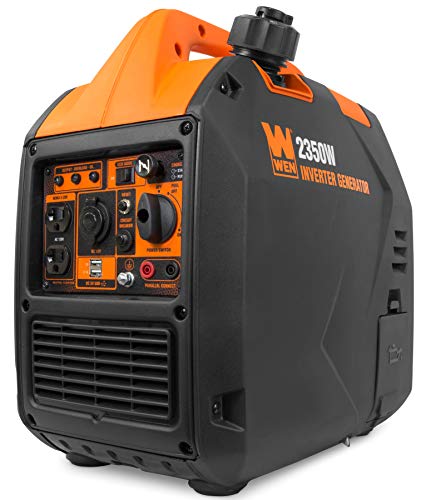
This WEN model emphasizes ultra-lightweight portability and quiet operation. Weighing roughly 39 pounds, it’s easy to carry and store. It operates at a level that the US Department of Health and Human Services describes as comparable to a normal conversational volume, making it one of the quieter options for residential areas, campsites, or small venues. It delivers 2350 surge watts and 1900 rated watts of clean power, which is suitable for charging phones, tablets, and powering small electronics, TVs, or a laptop without risking damage from dirty power.
Aceup Energy 4000 Watt Portable Generator

The Aceup Energy 4000-watt generator is designed for home backup and RV use, combining a robust 149cc 4-stroke OHV engine with a 4000 peak / 3200 running watts. It offers up to about five hours of runtime at half-load on a 1.32-gallon tank. Included features include a built-in intelligent gauge that tracks voltage, run-time, fuel level, hertz, and power output, plus a low-oil indicator and an economy mode to save fuel. Outlets include 120V AC, one RV receptacle, and a 12V DC car charger. The unit is parallel-ready for adding more power when needed (kit sold separately). It’s positioned as a solid mid-range quiet option in portable power suites.
Pulsar PGD40ISCO Ultra Light Quiet 4000W

The Pulsar PGD40ISCO delivers 4,000 peak watts and 3,200 running watts, with a compact 1-gallon fuel tank that provides roughly four hours of runtime at half load. It is marketed as ultra-quiet, with a rated noise level of 59 dB, making it one of the quieter options among portable gas generators. Its lightweight design and efficient fuel use make it suitable for camping, tailgating, and emergency backup scenarios where quieter operation is a priority.
WEN 2500-Watt Inverter Generator

The WEN 2500-Watt inverter offers compact power with a fuel shutoff feature to maximize engine life by allowing the carburetor to drain before shutdown. It provides up to 2500 surge watts and 1900 running watts, producing clean power suitable for sensitive electronics such as smartphones and laptops. Its smaller footprint makes it ideal for lightweight camping gear, tailgating setups, or as a portable backup for essential devices in the event of an outage. The combination of quiet operation and portability is a recurring theme across this class of generators.
PowerSmart 4400-Watt Inverter Generator

The PowerSmart 4400-Watt inverter is designed for higher-power needs with a starting wattage of 4400W and running wattage of 3600W. It features a 1.6-gallon tank offering up to 11 hours of runtime at 25% load, which is advantageous for extended outings or more demanding backup scenarios. Although relatively robust, it stays within the quiet category for a generator of this power level, producing 76 dB at 23 feet at 25% load. The unit is EPA compliant and includes a 23-foot- to 25-foot-quiet operation benchmark, making it suitable for residential use and campsites where noise is a concern.
PowerSmart 3600-Watt Portable Inverter with CO Protect

This compact PowerSmart unit delivers 3600 starting watts and 3200 running watts with clean power, maintaining less than 3% total harmonic distortion. It promises about 4.5 hours at 50% load, and weighs around 50 pounds with an integrated carry handle for portability. Its quiet operation is rated at 59 dBA from 23 feet at 25% load and 70 dBA from the same distance at full load, making it a balanced choice for those who need a compact, reasonably quiet option with RV-ready capabilities.
Buying Guide: Key Considerations When Choosing a Quiet Generator
- Noise level: Look for inverter generators with dB ratings measured at a consistent distance (usually 23 feet). Values around 50–60 dB are typically considered quiet for portable power.
- Power needs: Assess your required surge and running watts. For RVs and home backup, target 3200–4000 running watts for typical appliances, plus a buffer for electronics and devices.
- Weight and portability: If you plan to transport the generator often, prioritize lighter models with built-in handles or wheels.
- Fuel efficiency and runtime: Larger fuel tanks and economy/eco modes extend runtime between refills, a key factor for long camping trips or outages.
- Duty cycle and duty features: CO sensors, automatic shutoffs, and low-oil indicators add safety and longevity; consider parallel capabilities if you might expand power needs later.
- Electrical quality: Clean, stable power (low THD) helps protect sensitive electronics like smartphones, laptops, and home devices.
- Portability vs. power balance: Higher-wattage generators tend to be heavier; identify the best trade-off for your use cases (camping, RV, emergency backup).
- Warranty and service: A robust warranty and accessible service network improve long-term usability and peace of mind.
When selecting a quiet generator, compare models not only by stated wattage but by real-world noise levels, weight, and fuel efficiency. Inverter technology is central to producing cleaner power with lower noise, making these units better suited for sensitive devices and residential environments. For RVs and campsites, a model in the 2000–4000 watt range provides versatile performance while maintaining a reasonable noise footprint.