Best Small Portable Air Con for Quick Personal Cooling
For American homes and offices, a compact, portable air conditioner can deliver targeted relief on hot days. This guide highlights five small, portable cooling options that balance performance, energy use, and ease of setup. Each unit below is chosen for versatility in small to medium spaces, simple controls, and quiet operation. Read on for quick comparisons, a buying guide, and practical tips to maximize cooling without heavy installation.
| Product | Brand | Key Benefit |
|---|---|---|
| Ontel Arctic Air Turbo Chill Evaporative Cooler | Arctic Air | Hydro-Chill technology with 4 speeds and up to 8 hours per fill |
| LifeMaster 8,000 BTU Portable AC | Lifemaster | 3-in-1: AC, dehumidifier, and fan with remote control |
| SereneLife 8,000 BTU Portable AC | SereneLife | 4-in-1 with dehumidifier, heater, and remote; 350 sq ft coverage |
| Dreo 10,000 BTU Portable AC | Dreo | Low-noise operation and drainage-free cooling option |
| JYew Portable Portable AC Evaporative Unit | JYew | 4-in-1 with large water tank and 120° oscillation |
Ontel Arctic Air Turbo Chill Evaporative Cooler

The Arctic Air Turbo Chill uses Hydro-Chill technology to deliver cool, humidified air in small spaces. This compact cooler is designed for personal areas such as bedrooms, home offices, or dorm rooms, where a full-size AC isn’t practical. It offers four speeds (Low, Medium, High, Turbo) and a mist control to adjust humidity and airflow. With a quiet, whisper-quiet operation profile, it supports up to eight hours of cooling per water fill, depending on conditions. The quick-view water gauge helps monitor levels, while the adjustable grill and wide-angle oscillation direct airflow precisely where needed.
Key considerations include the evaporative cooling method, which relies on water and ambient humidity. In very humid environments, the cooling effect may be limited compared to compressor-based units. However, the unit remains energy-efficient and simple to move between rooms, thanks to its light weight and compact footprint. This can be an excellent choice for personal comfort without the bulk of a traditional AC.
LifeMaster 8,000 BTU Portable AC
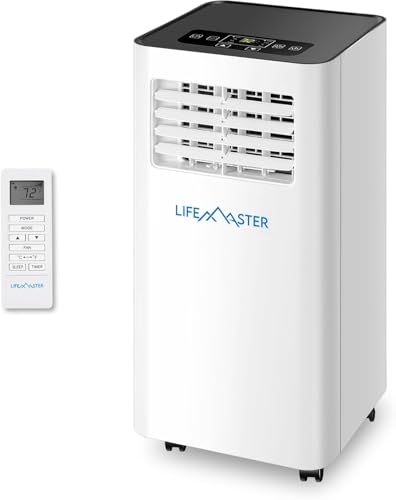
This 3-in-1 unit combines air conditioning, dehumidification, and a fan, making it adaptable to varying indoor conditions. The built-in dehumidifier helps reduce excess moisture, which can make hot days feel more uncomfortable. Operation is controlled via a digital remote, with a compact form factor that facilitates easy movement between rooms. The 8,000 BTU rating provides cooling for many small-to-medium rooms, and the unit includes casters for mobility. A sleep mode adds quiet operation for nighttime use, while a removable filter simplifies maintenance.
Consider that installation requires a window exhaust kit and a hose, with the option to remove the unit for seasonal storage. The combined features push efficiency in moderate spaces, but larger rooms beyond its rated area may require more powerful cooling. The digital remote and built-in timer help schedule cooling to match daily routines, aiding energy management.
SereneLife 8,000 BTU Portable AC
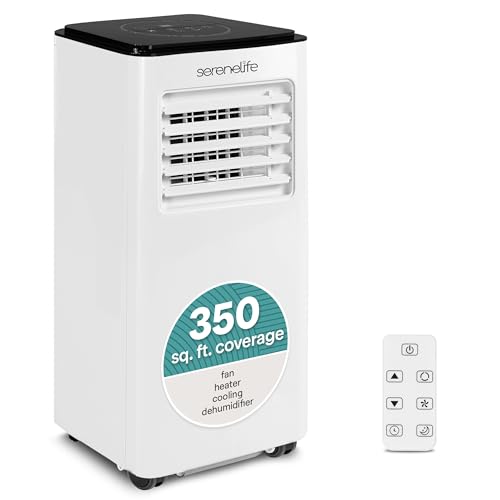
This 4-in-1 portable air conditioner offers cooling, dehumidification, heating, and fan functions, covering up to 350 square feet. It includes a window kit for venting and remote control for convenient operation from a distance. The unit is designed with a compact footprint and a drain-free option, depending on the model and humidity levels. The included heat mode expands its seasonal usefulness, while the sleep-friendly features help maintain a comfortable environment through the night.
Important considerations include its coverage area and noise profile. With a focus on practical versatility, it balances cooling power with energy efficiency. However, the presence of a heater and dehumidification means heat generation and moisture removal must be managed to maintain comfort in varying climates. The remote and timer features support automation for daily routines.
Dreo 10,000 BTU Portable AC

The Dreo unit delivers a higher cooling capacity with 10,000 BTU and a focus on quiet operation. It features a drainage-free design for simpler setup in certain environments and a wide cooling range to cover larger living spaces efficiently. The compressor and fan work in tandem with user-friendly controls, including a timer and remote, enabling flexible scheduling. The no-drain option can be advantageous in high-humidity areas or spaces where venting windows is challenging.
Prospective buyers should weigh the benefits of a higher BTU against energy use and room size. While more powerful, these units may cost more to run on hot, extended days. The included smart features, timer, and ease of installation make this a strong all-around choice for bedrooms or small living rooms that require reliable cooling without extensive setup.
JYew Portable Air Conditioners Evaporative Mini Unit
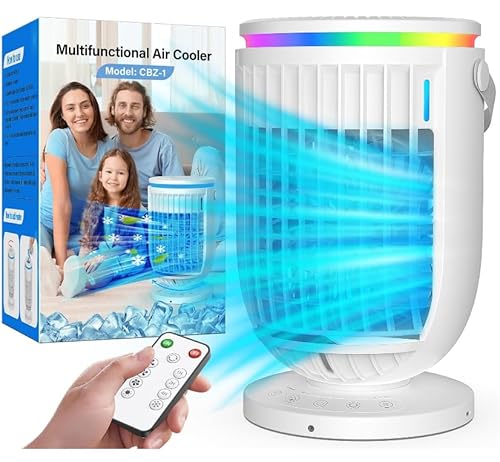
The JYew unit emphasizes a large water reservoir and 120-degree oscillation to distribute cooled air evenly across rooms. It functions as a 4-in-1 device: humidifier, fan, cooler, and air conditioner. The extended water capacity supports longer cooling cycles between fills, while the wide-angle oscillation helps reach multiple corners of a space. A compact form factor and whisper-quiet operation make it suitable for bedrooms, home offices, and living areas where a full-size AC isn’t feasible.
From a purchase perspective, the primary trade-off with evaporative cooling is ambient humidity reliance. In dry climates, it can feel very effective; in humid environments, the cooling effect may be diminished. The device’s mobility and low noise profile are clear advantages for personal comfort and multi-room use, though it may not replace a traditional high-BTU AC in larger spaces.
Buying Guide: Key Purchase Considerations
- Cooling method: Evaporative (portable misters) vs. compressor-based units. Evaporative coolers are energy-efficient and simple but depend on humidity, while compressors provide stronger, more consistent cooling in a wider range of conditions.
- Room size and BTU rating: Match the unit’s capacity to the space. Overprovisioning BTU leads to unnecessary energy use; underprovisioning reduces comfort.
- Ventilation and installation: Some units require window kits or exhaust hoses; others offer ventless or drainage-free operation. Consider portability and ease of setup.
- Noise levels: Look for dB ratings or user-reported quiet operation, especially for bedrooms or home offices.
- Energy efficiency and modes: Features such as sleep mode, programmable timers, and dehumidification can lower energy use and improve comfort in different conditions.
- Maintenance: Removable filters, ease of cleaning, and water tank capacity affect long-term use and hygiene.
- Additional features: Remote control, app compatibility, oscillation range, and LED indicators can influence daily convenience.
- Cost of ownership: Consider initial price, running costs, and potential durability or warranty coverage when comparing models.