Best 4-20 mA Signal Generator for PLC Testing and Simulation
Finding a reliable 4-20 mA signal generator helps engineers simulate current loops, calibrate controllers, and validate PLC and panel wiring. This guide highlights top options on Amazon, comparing features, power options, and usability. Each product section provides a quick snapshot and practical considerations to help you choose the right device for your needs and environment.
Summary of chosen products
- DROK 4-20mA Generator, 0-10V Output, Adjustable Signal Generator
- Riiai Upgraded 4-20mA 0-24V Current Signal Generator
- Riiai DC 0-10V 0/4-20mA Signal Generator with Built-in Battery
- TKXEC Adjustable Signal Generator 4-20mA, 0-12V, High Precision
- UCTRONICS DC ±10V 0/4-20mA Signal Generator, USB Powered
DROK 4-20mA Generator, Adjustable Signal Generator

The DROK device combines current and voltage signaling in a single module, generating 0/4–20 mA and 0–10 V signals. A multi-cycle potentiometer allows precise adjustments, making it suitable for PLC panel testing and LED diagnostics. Its compact design reduces bench clutter while providing reliable output for routine calibration tasks.
Key features include dual signal generation, simple dial-based control, and an intuitive interface that aids quick setup. The unit is designed for practical use in lab and field environments, offering dependable performance for developers and technicians working with analog control loops.
Riiai Upgraded 4-20mA 0-24V Signal Generator

Riiai’s upgraded model provides precise 4-20 mA current signals and 0–24 V voltage output, with multiple signal types and a real-time curve feature. A 2.4-inch TFT color display enhances visibility, and the built-in 3000 mAh USB battery enables long operation between charges. It supports 0.01 mA and 0.01 V precision, making it suitable for PLC testing, panel debugging, and device verification in varied lighting conditions.
Riiai DC 0-10V 0/4-20mA Signal Generator
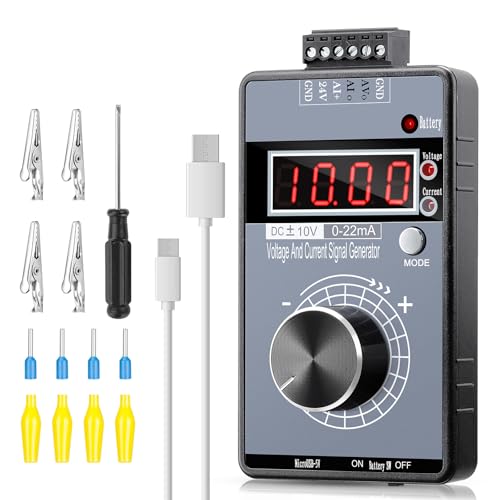
This 2-in-1 generator provides adjustable voltage (-10 V to +10 V, 0.01 V precision) and current (0–22 mA, 0.01 mA precision). An encoder knob enables precise output control, with a four-digit display to monitor voltage or current. Power is flexible, via built-in 1000 mAh battery or external DC input, enabling operation in diverse environments and during fieldwork.
TKXEC Adjustable Signal Generator 4-20mA
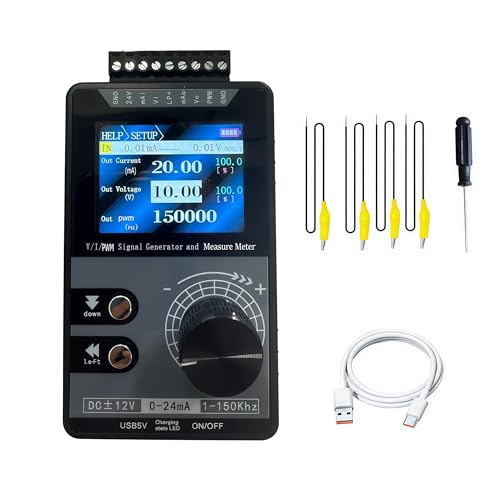
TKXEC offers an adjustable 4–20 mA current output with a compatible 0–12 V voltage range. A built-in 1500 mAh battery and a 0.8 A charging rate support extended use, with indicators showing battery status. The device emphasizes short-circuit protection and calibration accuracy, making it a practical option for PLC panel testing and LED diagnostics in compact setups.
UCTRONICS DC ±10V 0/4-20mA Signal Generator

UCTRONICS provides ±10 V output with a 0–22 mA current range, both adjustable via a simple encoder knob and calibratable. It supports external USB power or a DC supply (15–30 V), accommodating workstation and bench use. The device’s external power flexibility makes it suitable for fixed installations or portable testing rigs in industrial environments.
DROK 4-20mA Generator (2-Pack)
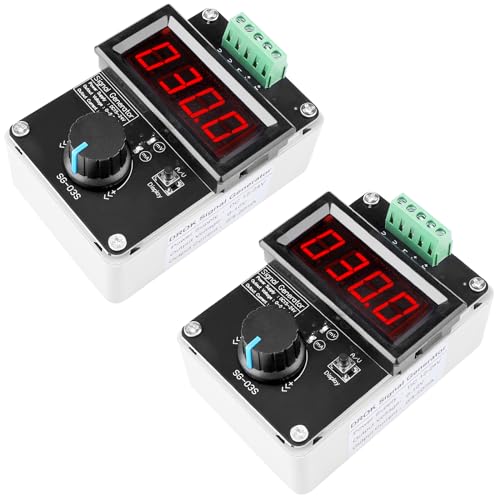
This two-pack from DROK mirrors the single-unit model with dual output capabilities, enabling simultaneous 0–10 V and 0/4–20 mA signals. A bright LED display assists monitoring, while back-panel calibration pots allow display and output alignment. The kit is designed for labs needing redundancy or a multi-point testing setup without sacrificing accuracy.
Signal Generator 4-20ma, 4-20mA High Accuracy

This device focuses on accuracy and a liquid crystal display for live readouts. Rotary encoder adjustment and non-polarity terminals simplify connection, with output options for device control and signal debugging in a single loop. Its versatility supports testing across a wide range of industrial devices and control systems.
Hapivida Signal Generator 4-20mA
Hapivida’s model provides 4–20 mA output with a focus on high-accuracy performance and an LCD display to monitor values. It supports precise adjustment via a rotary encoder and offers a straightforward interface, making it suitable for quick tests and repeatable calibration across test stands and lab benches.
Buying Guide: Key Purchase Considerations
- Signal ranges and accuracy: Look for mA precision around 0.01 mA and voltage precision near 0.01 V to ensure reliable PLC input simulations.
- Output options: Decide between single-channel units (current or voltage) and dual-channel units that provide simultaneous current and voltage signals for streamlined testing.
- Power and portability: Battery-powered units are ideal for fieldwork, while USB-powered models suit bench work. Some devices support external DC power as well.
- Display and usability: A clear LED or LCD readout reduces guesswork. TFT color screens are helpful for nighttime use or in busy laboratories.
- Programmability and presets: Devices with programmable outputs or multiple programmable channels enable repeatable tests and quick scenario changes.
- Protection and safety: Short-circuit protection and robust build quality prevent damage to controllers under test and the generator itself.
- Compatibility and calibration: Ensure the device can be calibrated and compatible with standard PLC inputs and test rigs you already use.
- Portability versus capacity: Consider battery life and charging time if you plan extended field testing or mobile setups.
- Connectivity: USB, external DC input, and battery power options provide flexible deployment in labs, plants, and service calls.
When selecting a 4-20 mA signal generator, align the device’s output range with your control system’s input tolerance, and prioritize calibration capabilities to maintain accuracy across multiple sessions. For teams balancing cost and capability, a dual-output model can streamline workflows by reducing the number of separate instruments required.