Best RV Solar Power Kits for Independent Energy on the Road
Travelers and RV enthusiasts rely on reliable off-grid power, even when unplugged. This guide highlights five top-rated RV solar power kits, covering compact setups for smaller rigs and larger packages for full-time off-grid living. Each option emphasizes practical installation, durability, and performance under typical sun conditions in the American landscape.
Summary of Selected Products
- Renogy 200 Watts 12V Monocrystalline RV Solar Panel Kit with Adventurer 30A LCD PWM Charge Controller
- ECO-WORTHY 200 Watts 12V/24V Solar Panel Kit with 30A PWM Controller
- ECO-WORTHY 400 Watt Premium Solar Panel Kit (4x100W) with MPPT Controller
- Renogy 400 Watt Premium Kit (4x100W) with MPPT Controller and Bluetooth
- ECI Power 100W 12V Solar Power Kit with 12V LiFePO4 Battery and PWM Controller
Renogy 200W RV Solar Kit With Adventurer Controller
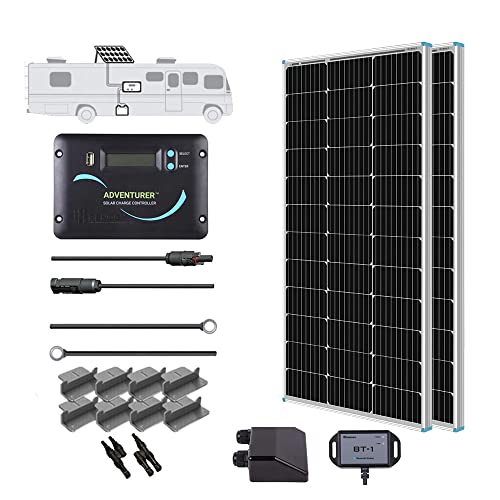
The Renogy kit combines a 200-watt monocrystalline panel with the Adventurer 30A PWM charge controller. It is designed for RVs, boats, trailers, and campers where space is a premium. The 22% efficiency panel is built with a corrosion-resistant aluminum frame, enabling durability against wind and snow loads. The Adventurer controller provides protections against overcharge, over-discharge, and short circuits, helping to maintain battery health while offering a clean flush-mount aesthetic on vehicle walls.
Key details to consider include its daily output estimate of about 800Wh under four hours of sun and its compact footprint. The kit is well-suited for travelers who need a reliable, space-conscious solution with straightforward wiring and mounting hardware. For RVs with modest energy needs, this setup can keep essential devices charged and ready in remote locations.
Operational notes: The system’s performance depends on sun exposure and the battery setup you pair it with. The 800Wh/day estimate assumes optimal four-hour sun availability, so users should plan for variations based on latitude and season. The kit’s PWM controller favors simple, reliable operation, though it may not reach the efficiency gains of advanced MPPT controllers in all conditions.
ECO-WORTHY 200W Solar Panel Kit With 30A PWM Controller

This ECO-WORTHY kit targets versatility with a 200-watt monocrystalline panel and a 30A PWM controller. It supports RVs, campers, boats, and other off-grid applications, with an expected daily output near 800Wh under four hours of sun. The panel uses a corrosion-resistant aluminum frame and is designed to withstand wind and snow loads, making it a practical option for frequent travelers in varied climates. The IP65-rated junction box adds weather protection, contributing to long-term reliability in outdoor environments.
Pros include a straightforward, budget-conscious path to off-grid power, robust frame construction, and a compatible PWM controller for steady charging. Potential drawbacks are similar to other PWM setups: there may be fewer efficiency gains in high-voltage battery systems compared to MPPT options, and longer sun exposure will boost overall daily energy generation.
ECO-WORTHY 400 Watt Premium Solar Panel Kit

For RV enthusiasts seeking more power, the ECO-WORTHY Premium 400W kit delivers four 100W panels along with a 40A MPPT controller. The high-efficiency monocrystalline cells and 21% charging efficiency boost performance in varied light conditions. The kit emphasizes durability with heavy-duty framing that withstands wind and snow loads, and it includes pre-installed by-pass diodes to minimize power loss in shade. MPPT tracking provides higher energy harvest in marginal sun, making this kit suitable for larger RVs or campers with higher energy demands.
Highlights to weigh include the potential for higher daily energy with MPPT control and the cooler integration of multiple panels. Installation tends to be more involved due to the MPPT controller and the larger array, but the overall payoff is a scalable, higher-output system for weekend trips or full-time use off the grid.
Renogy 400W Premium Kit With MPPT Controller

This premium kit from Renogy pairs four 100W monocrystalline panels with a 40A MPPT charge controller, Bluetooth module, and mounting hardware. The kit is designed for grid-tied or off-grid RV systems, offering higher efficiency (MPPT) and a more robust energy harvest—particularly in less-than-ideal sunlight. The panels use a 3.2mm low-iron glass surface and an aluminum frame to resist weather effects, while the controller includes a temperature sensor to optimize charging across battery temperatures. A long-term warranty adds an assurance element for RV owners planning extended trips.
Considerations include higher installation complexity and the need for compatible battery storage. MPPT systems tend to deliver better performance in cold or fluctuating light conditions, though they come at a higher upfront cost. For campers with sizable energy loads like air conditioning or entertainment systems, this kit offers meaningful daily power gains.
ECI Power 100W 12V Solar Kit With LiFePO4 Battery

The ECI Power kit offers a compact setup with a 100W mono panel, a 12V LiFePO4 battery, and a 10A PWM controller. It is framed as a complete off-grid solution, including mounting brackets and cables for RVs, trailers, campers, and boats. The LiFePO4 chemistry provides longevity with high cycle counts, making it a fitting choice for frequent travelers who want reliable storage with a lighter weight compared to lead-acid options. The kit features user-friendly assembly and a focus on safety with a durable system design.
Key considerations include the relatively modest power output of 100W—sufficient for essential devices and charging, but not a full household load. The integrated LiFePO4 battery helps maximize usable energy and supports deeper discharge without compromising battery life. This kit is appealing for travelers who prioritize portability and a turnkey package with a built-in storage solution.
Buying Guide: What To Look For In An RV Solar Kit
Energy needs and rig size strongly influence kit choice. A larger RV or one that runs high-draw appliances (air conditioners, microwave, inverter-heavy devices) will benefit from higher wattage and MPPT controllers, while smaller setups are well-served by compact 200W–400W PWM configurations.
System components to compare:
- Panel type and efficiency: Monocrystalline panels offer higher efficiency and compact size, beneficial for limited roof space.
- Controller type: PWM controllers are straightforward and reliable but less efficient than MPPT controllers, which harvest more energy in variable conditions.
- Battery compatibility: LiFePO4 batteries provide long life, lighter weight, and stable performance, but require a compatible charging profile.
- Durability and weather rating: Look for corrosion-resistant frames, IP ratings, and wind/snow load tolerances for outdoor RV use.
- Mounting and wiring: Pre-drilled panels, mounting brackets, and included cables simplify installation; ensure wiring matches your battery voltage (12V systems are common in RV setups).
Performance expectations should be aligned with sun exposure in your typical travel regions. In the American landscape, seasonal variations and shading from trees or mountains can impact daily output. To maximize reliability, consider a system that supports a flexible battery bank and expandable panel options as your energy needs evolve.
Installation considerations encompass roof weight, panel orientation, and space efficiency. For portable or temporary setups, lightweight models and easy teardown can be advantageous. If you require off-grid living comfort, MPPT-enabled kits with larger arrays are preferable, even though they require more planning and upfront investment. Always verify compatibility of the controller voltage and battery type with your existing or planned RV electrical system.