Best on-Grid Solar Power Essentials and Insights for Home Power
Discover practical resources and tools to support on-grid solar setups, from instructional guides to solar-powered devices and generators. This article highlights five relevant products that help homeowners understand, plan, and use solar power effectively while staying connected to the grid. The included items cover learning, strategic gameplay for planning, and reliable portable power solutions for emergencies or outdoor use. Explore the selected products below and use the buying guide to compare features and considerations for a grid-connected solar system.
Summary of Selected Products
| Product | Brand | Type | Key Benefit |
|---|---|---|---|
| Install Your Own Solar Panels | Storey Publishing | Educational Book | Design and install photovoltaic systems for homes |
| Power Grid Recharged | Rio Grande Games | Board Game | Strategy planning related to energy networks |
| Kepswin Solar Charger Power Bank 49800mAh | Kepswin | Portable Power Bank | Multiple built-in cables and solar charging panels |
| Anker SOLIX C1000 Gen 2 | Anker | Portable Power Station | High-capacity, fast recharge for backup power |
| DARAN Solar Generator with Panel Included | DARAN | Portable Power Station | All-in-one solar kit for mobile and emergency use |
Install Your Own Solar Panels: A Practical Guide

The book “Install Your Own Solar Panels: Designing and Installing a Photovoltaic System to Power Your Home” provides foundational guidance for homeowners who want to explore grid-tied solar projects. It covers the design process, choosing equipment, and steps to safely integrate a PV system with existing electrical infrastructure. While primarily educational, the content helps readers translate energy concepts into actionable plans aligned with on-grid compliance and efficiency goals. Readers should pair this resource with up-to-date local regulations and utility interconnection requirements for a successful installation.
Key concepts include system sizing, understanding sun exposure, and evaluating costs versus long-term savings. The book emphasizes hands-on planning and provides practical methodologies that can be applied when budgeting, selecting panels, inverters, and mounting options. It serves as a starting point for homeowners who are investigating solar for grid-connected homes and want to make informed decisions before investing in equipment or professional installation.
Power Grid Recharged: A Strategy Game For Energy Planning

Power Grid Recharged offers a tabletop perspective on energy networks, enabling players to simulate building and managing utility grids, a useful mental model for understanding the constraints of real-world solar adoption within an on-grid framework. While the game is not a technical manual, it helps readers envision critical decision points such as resource allocation, plant selection, and market dynamics. This product complements technical guides by fostering strategic thinking about economics, capacity planning, and reliability in energy systems.
Key features include a double-sided game board, multiple colors of wooden houses, power plant cards, and auction mechanics, all contributing to a richer appreciation of how energy infrastructure can evolve under different scenarios. For homeowners, the game offers a conceptual sandbox to discuss grid interactions, policy considerations, and the potential impact of solar adoption on demand and distribution networks.
Kepswin Solar Charger Power Bank 49800mAh
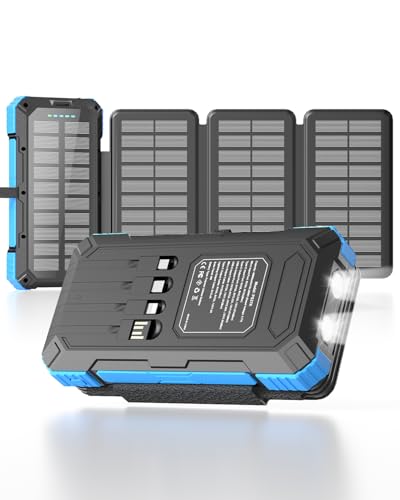
The Kepswin solar charger power bank blends portability with practical solar charging capabilities. It features four built-in data cables (iOS, Type-C, USB-A, Micro) plus multiple output ports, enabling simultaneous charging for several devices. Its 49,800 mAh capacity supports extended outdoor use and emergency power when grid reliability is compromised. The unit emphasizes safety with certifications and protective features, alongside four solar panels designed to accelerate recharging. This makes it a versatile companion for outdoor activities, camping, and emergency preparedness where access to electrical outlets is limited.
Considerations include the trade-off between high capacity and the weight/size of the unit, the efficiency of the integrated solar panels, and how it fits with a home off-grid or emergency power plan. For a grid-connected household, this device is best viewed as a portable supplement for charging essential devices during outages and outdoor scenarios rather than a primary home power source.
Anker SOLIX C1000 Gen 2 Portable Power Station

The Anker SOLIX C1000 Gen 2 provides a robust portable power solution with 2,000W continuous output and a 1,024Wh LiFePO4 battery. It supports fast recharge—up to 1,600W using HyperFlash technology—making it a strong option for outage prep, remote work, or camping. The unit is compact and portable, designed for easy transport within homes or RV setups. It operates across multiple ports, enabling power delivery to several devices or appliances simultaneously. The product is positioned as a flexible backup power source that can complement on-grid systems during outages or off-grid activities.
Key considerations include the balance of capacity, weight, and recharge speed, as well as compatibility with solar panels if you plan to expand with renewable energy inputs. Users should assess the reliability of the battery chemistry, device wattage requirements, and the potential need for a dedicated solar charging setup to maximize grid-independent use while maintaining grid-tied readiness.
Daran Solar Generator With Included Panel

The DARAN Solar Generator kit includes a 192Wh portable power station and a 30W solar panel, offering a compact, turnkey solution for portable solar power. With eight output ports including two AC outlets and multiple USB-C/USB-A/12V options, it can support a range of devices during outdoor trips or emergency outages. The system emphasizes pure sine wave output, which ensures compatibility with sensitive electronics, PCs, and small appliances. While it is not a full home backup solution, it provides reliable, scalable off-grid power for critical devices when connected to solar charging.
Key trade-offs include the modest total energy capacity and the solar panel size, which affects how quickly the unit can recharge in sunny conditions. This solution is best suited for temporary power needs or as part of a layered backup strategy in conjunction with a home solar installation and utility interconnection plan.
Buying Guide: On-Grid Solar Power Considerations
When evaluating on-grid solar power, homeowners should consider system design, reliability, and future maintenance. Key purchase considerations include:
- System goals: Determine whether you aim to reduce electricity bills, increase resilience, or prepare for outages. This shapes panel capacity, inverter choices, and storage needs.
- Interconnection and permits: Verify utility requirements, interconnection agreements, net metering policies, and local codes. Compliance ensures a smooth approval process and optimal grid interaction.
- Panel and inverter types: Compare monocrystalline vs polycrystalline panels for efficiency and space. Choose inverters (string, micro, or hybrid) that match panel configuration and anticipated load.
- Battery storage planning: Decide on stand-alone storage or grid-tied storage with virtual storage credits. Consider capacity, depth of discharge, and life cycles for long-term performance.
- Cost vs savings: Calculate upfront costs, projected energy savings, tax credits, and maintenance. Factor in panel warranties and system monitoring.
- Backup power needs: If you require outage resilience, evaluate the role of portable power stations and generators as supplements to a grid-tied system.
- Maintenance and monitoring: Look for built-in monitoring, performance dashboards, and remote troubleshooting options to maximize system uptime.
- Portability and expansion: For families and frequent travelers, portable kits and modular components offer flexibility without tying you to a fixed installation.
In summary, a robust on-grid solar approach blends educational understanding, strategic planning, and practical power solutions. The selected products illustrate how to learn the basics, model energy planning, and secure reliable backup power as part of a comprehensive solar strategy. Compare capabilities, warranties, and energy needs to identify the best combination for your home.