Best High-Efficiency Water Heaters for Home Use
Finding a high-efficiency water heater that fits your home and hot-water needs can lower energy bills while ensuring reliable comfort. This guide highlights five top-performing options from trusted brands, with practical considerations for installation, fuel type, and efficiency. Each model listed here emphasizes energy conservation, consistent hot water, and suitability for common American households. Use the buying guide to compare tankless options, outdoor versus indoor installation, and smart-control features before purchasing.
| Product | Brand | Type | Max Flow (GPM) | Key Efficiency Notes |
|---|---|---|---|---|
| Rinnai RX199iN Condensing | Rinnai | Tankless Gas Water Heater | 11.1 | UEF .98, Versa Vent, Smart Sense control, indoor/outdoor capable |
| APUS 190,000 BTU Outdoor | APUS | Tankless Gas Water Heater | 8.1 | Outdoor-friendly, WiFi and remote control, 0.79 GPM minimum flow |
| Rheem RTGH-95DVELN-3 | Rheem | Condensing Indoor Tankless | 9.5 | UEF .93, WiFi, high-efficiency for large homes |
| Rheem RTG-70XLN-3 Outdoor | Rheem | Outdoor Tankless | 7.0 | Outdoor installation, reliable hot water, 160,000 BTU |
| ThermoMate CZ422NG | ThermoMate | Indoor Tankless | 4.7 | 102,000 BTU, high efficiency, multi-point heating |
Selected models above balance efficiency, flow capability, and installation practicality for typical U.S. homes. The list includes condensing and non-condensing options, as well as indoors and outdoors variants, to help you compare savings across use cases.
Rinnai RX199iN Condensing Tankless Water Heater

The RX199iN is a compact, versatile gas-powered tankless water heater suitable for indoor or outdoor installation. It supports up to 11.1 GPM and uses a Smart Sense gas control system, enabling efficient operation with propane or natural gas. Its Versa Vent compatibility expands installation options, and an interface supports easy operation. Efficiency is elevated with a UEF of 0.98, contributing to reduced energy usage during peak hot-water demand.
Key considerations include precise temperature control and the potential need for a control module for WiFi access. The unit is designed to be space-saving, making it ideal for homes seeking continuous hot water without the bulk of a tank.
APUS 190,000 BTU Outdoor Tankless Water Heater

This outdoor unit delivers 8.1 GPM at up to 190,000 BTUs, ideal for whole-house on-demand hot water. It is designed to serve multiple outlets simultaneously (3 showers + 2 faucets) and maintains performance with a low minimum flow of 0.79 GPM, ensuring reliable hot water even with reduced water pressure. WiFi-enabled remote control adds convenience for temperature adjustment and monitoring, making it a modern choice for energy-conscious households with outdoor installation needs.
Pros include space-saving outdoor design and straightforward connections (3/4″ water and gas). Consider weather protection and venting requirements when planning installation.
Rheem RTGH-95DVELN-3 Condensing Indoor Tankless
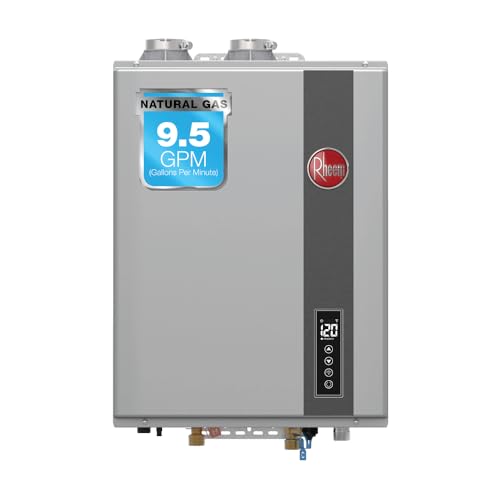
Rheem’s RTGH-95DVELN-3 is a high-efficiency condensing indoor tankless water heater with up to 9.5 GPM and 199,900 BTUs. The condensing design improves energy efficiency, often achieving close to 0.93 UEF, which helps reduce utility costs in homes with multiple bathrooms or high simultaneous hot-water use. WiFi connectivity enables remote monitoring and control, aiding in optimizing daily hot-water patterns and energy usage.
Installation typically occurs indoors with a venting requirement. It pairs well with modern home automation setups and can deliver dependable hot water during peak demand while maintaining energy-conscious operation.
Rheem RTG-70XLN-3 Outdoor Tankless
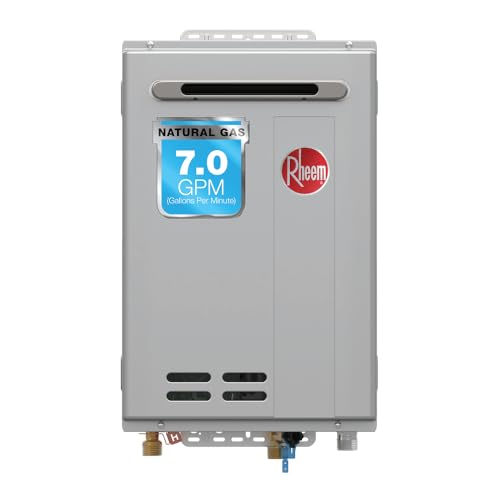
Outdoor installation makes the RTG-70XLN-3 a flexible option for homes without indoor venting constraints. With up to 7.0 GPM and 160,000 BTUs, it provides solid capacity for typical families, especially where space or interior venting is a concern. The unit is designed for durability in exterior conditions and is intended for wall mounting by a qualified installer.
Outdoor models simplify placement but require weatherproof clearances and proper venting planning. Its non-condensing design may be less efficient than condensing counterparts, but it remains a robust solution for climates and households seeking outdoor performance with reliable hot water at moderate flow rates.
ThermoMate CZ422NG Indoor Tankless

The ThermoMate CZ422NG offers 4.7 GPM at 102,000 BTU, providing a solid balance of flow and efficiency for smaller homes or limited hot-water demands. It employs rapid on-demand heating with a sensor-enabled control strategy to maintain stable water temperature and reduce fluctuations. The unit targets efficient operation for multi-point heating needs and emphasizes safety features and durable materials to maximize reliability.
Small to mid-sized homes can benefit from its compact footprint and energy-conscious performance, with attention to installer compatibility and venting requirements for indoor installation.
Buying Guide: Key Purchase Considerations
- Flow rate needs: Determine your peak simultaneous hot-water usage (showers, faucets, appliances). Tankless units specify GPM; choose a model that covers your needs at reasonable temperature rise.
- Fuel type and availability: Gas-powered units (natural gas or propane) offer high capacity but require venting and installation considerations. Electric tankless options provide easier installation but may have lower flow in cold climates.
- Condensing vs non-condensing: Condensing units recover heat from exhaust, delivering higher efficiency (UEF typically above 0.9). Non-condensing models can be lower cost but may have higher long-term energy use.
- Indoor vs outdoor installation: Outdoor units simplify venting but require weatherproofing and climate considerations. Indoor units need proper venting, space, and exhaust management.
- Venting and clearance: Confirm venting compatibility (direct vent, concentric vent, etc.). Allow adequate clearance for service access and maintenance tasks like flushing and filter checks.
- Smart controls: WiFi or app-based controls help monitor temperature, maintenance reminders, and energy usage. Ensure compatibility with your home network and any existing smart home ecosystem.
- Maintenance needs: Flushing and descaling are important for mineral-rich water. Some units offer streamlined flushing features to reduce time and effort.
- Installation cost vs lifetime savings: While upfront cost can be higher for tankless systems, long-term energy savings and endless hot water can justify the expense for larger households.
- Warranty and service: Review warranty terms for heat exchangers, burner components, and electronics. Consider local service availability for maintenance and repairs.
- Climate considerations: In colder regions, ensure the unit can maintain consistent output at lower incoming water temperatures. Some models are optimized for high-efficiency performance in winter months.
Choosing the right high-efficiency water heater involves balancing flow needs, installation constraints, and long-term energy savings. The models above represent a range of capabilities—from compact indoor units to outdoor installations and from standard non-condensing designs to advanced condensing options. Use this guide to prioritize features that matter most to your home and climate, and consult a qualified installer to confirm venting, gas supply, and mounting requirements before purchase.