Best Small Battery for Trolling Motor: Reliable Power for Your Boat
Choosing the right small battery for a trolling motor means balancing weight, capacity, and resilience against marine conditions. This guide highlights compact options that fit tight spaces yet deliver steady thrust and long runtimes. All picks are designed to be safe on boats, with features like sealed enclosures, BMS protection, and waterproof ratings. Review the five best-fitting choices below, then read a practical buying guide to compare key factors such as weight, cycle life, and compatibility with your trolling motor.
| Product | Type | Weight | Capacity | Special Feature |
|---|---|---|---|---|
| ECO-WORTHY 12V 20Ah Lithium Battery | LiFePO4 Portable | 4.85 lb | 20 Ah | Built-in BMS, long cycle life |
| Newport 12V50Ah AGM Deep Cycle | AGM Lead-Acid | 32 lb | 50 Ah | Sealed, trolling motor ready |
| Dyness 12V 100Ah LiFePO4 | LiFePO4 Battery | ~20.9 lb | 100 Ah | Bluetooth monitoring, IP65 |
| LiTime 12V 100Ah LiFePO4 (Group 31) | LiFePO4 | ~26 lb | 100 Ah | 100A BMS, low-temp protection |
| CHITOLI 12V 100Ah Group 24 LiFePO4 | LiFePO4 | ~22.6 lb | 100 Ah | Smart BMS, long cycle life |
ECO-WORTHY Portable 12V Lithium Battery

The ECO-WORTHY 12V 20Ah lithium battery provides a compact option for small trolling setups. It weighs under 5 pounds, enabling easy handling and installation on smaller boats or kayaks. Built-in BMS protects against common faults, and the 12V output supports basic trolling motor needs or auxiliary devices. Its portability makes it a practical choice for anglers who value lightweight gear and simple upgrades to existing systems.
Newport 12V50Ah Deep Cycle AGM

This Newport AGM battery weighs about 32 pounds and is designed to be lightweight for a deep cycle unit. It is sealed and maintenance-free, offering leak-proof reliability. The 12V system is tuned for trolling motors, delivering steady power without excessive weight. It’s a practical middle-ground option when you need more capacity than a compact lithium can provide but still want manageable boat weight.
Dyness 12V 100Ah LiFePO4
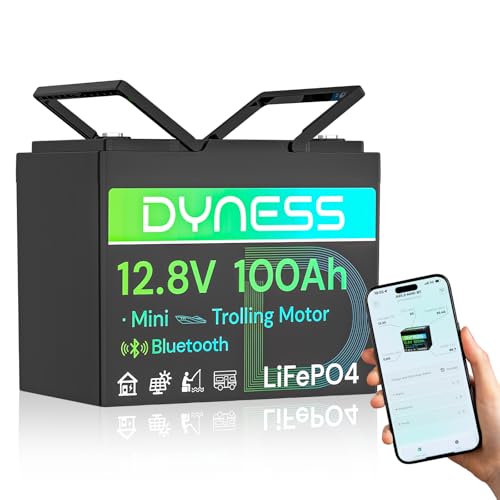
Dyness offers a compact LiFePO4 battery with 100Ah capacity and a Bluetooth 5.0 app for real-time monitoring. It features an IP65 waterproof rating and a 60-second current cutoff system for protection against surges. The battery is lightweight for its size, making it suitable for mid-sized trolling motors and boats where space is at a premium.
Litime 12V 100Ah LiFePO4 (Group 31)
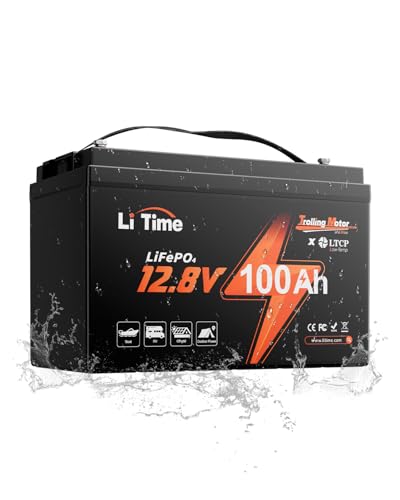
Litime’s Group 31 LiFePO4 battery is built for harsh marine environments with extra BMS protection against dust, water, and salt spray. It includes smart low-temp protections and a built-in shield for trolling motor voltage spikes, contributing to longer motor and battery life during rough conditions. This option balances capacity with a manageable weight range for many boats.
CHITOLI 12V 100Ah LiFePO4 Group 24

CHITOLI’s Group 24 LiFePO4 battery highlights a high cycle life with a capable 100Ah capacity and a smart BMS. It emphasizes safe operation in low-temperature and demanding environments, with a focus on providing reliable power to trolling motors and other marine electronics. Its compact footprint helps free up space on smaller vessels while maintaining runtime integrity.
Buying Guide: Key Factors To Compare
- Weight and size: Smaller capacities like 20Ah or 30Ah are ideal for compact boats or kayaks, while 100Ah models suit mid-sized trolling motors. Weigh the unit against your boat’s weight limits and mounting space.
- Chemistry and lifespan: LiFePO4 batteries offer longer cycle life (often 3,000–15,000 cycles) and lighter weight but at a higher upfront cost. AGM lead-acid options are cheaper upfront but heavier and shorter-lived.
- Cycling and depth of discharge: Deep cycle designs maximize usable capacity. Check the manufacturer’s DOD guidelines to estimate actual runtime for your trolling motor usage.
- Protection and safety: Look for built-in BMS, IP ratings, and temperature protection. These features help prevent overcharge, over-discharge, overheating, and short circuits in marine environments.
- Monitoring and connectivity: Bluetooth or app-based monitoring provides real-time status and performance metrics, enabling proactive maintenance and assurance on long trips.
- Compatibility: Confirm that the battery’s voltage, terminal type, and size align with your trolling motor model and boat electrical system.
- Maintenance: Sealed batteries (AGM, LiFePO4) require little to no maintenance, while some lead-acid options may need water top-ups and venting considerations.
When selecting a small trolling motor battery, consider how often you fish or drift in longer trips, the boat’s weight capacity, and how much space you can dedicate to a battery pack. The five options above cover a range of weights, capacities, and protection features to fit several boat sizes and motor specifications. Compare the trade-offs between lifetime cost, weight, and safety features to determine the best fit for your needs.