Best Surge Protectors for Main Panel and Whole-Home Protection
Choosing the right surge protector for a main panel or whole-home setup involves evaluating protection capabilities, installation practicality, and compatibility with residential electrical systems. The following selections represent Type 1 or Type 2 devices designed to protect main panels, subpanels, and large electrical loads from voltage transients. This guide highlights five strong options and a buying guide to help compare features, installation requirements, and durability for American homes.
| Product | Brand | Type | Protection | Ideal For |
|---|---|---|---|---|
| Eaton BRNSURGE | Eaton | Type BR Whole-Panel | 18 kA surge current | Main panel protection |
| Leviton R2120-B SPD | Leviton | Type 1/Residential | 36 kA per phase | Residential service entry |
| DITEK DTK-120/240CM+ | Ditek | Type 1 | UL1449 listed, NEMA 4X | Outdoor/indoor main-panel protection |
| Briidea Whole House SPD | briidea | Type 2 | 4-mode protection | Whole-home, load center |
| Schneider Electric SDSA1175 | Schneider Electric | Type 1 | 4-mode protection | Residential main panel |
Eaton BRNSURGE Type BR Whole-Panel Protector
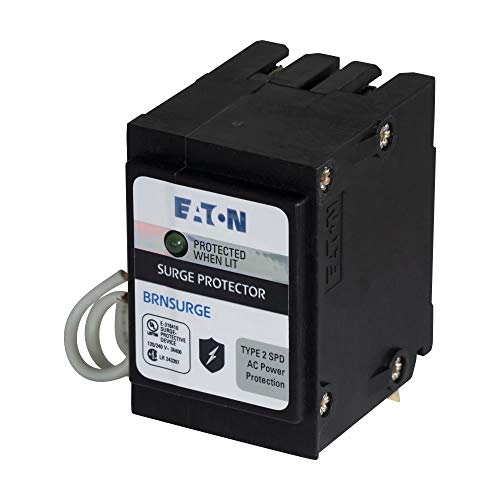
The Eaton BRNSURGE device is designed for whole-panel protection by integrating into main distribution paths. It uses 2 branch circuit spaces and provides a surge current rating of 18 kA, which supports medium to higher-load residential service panels. This Type BR unit targets main breaker panel protection, reducing transient energy before it can affect sensitive electronics downstream. Installation considerations include space in the panel and alignment with the service rating. The unit’s robust rating makes it suitable for homes with powerful HVAC systems or high electrical demand, where a direct surge barrier at the panel can prevent extensive damage.
Leviton Type 1 Surge Protective Panel (R2120-B SPD)

The Leviton R2120-B SPD offers residential Type 1 protection with a high surge capacity of up to 36 kA per phase. This compact SPD is intended for service entrances and main panels, aligning with Article 230.67 of the 2020 NEC, which requires protection for dwelling unit services. The R Series is noted for easy installation and suitability for residential applications, delivering reliable transient diversion to maintain load integrity. It is designed to be accessible to installers while maintaining robust protection for critical home electronics and appliances.
DITEK DTK-120/240CM+ Surge ARRESTOR

The DITEK DTK-120/240CM+ is a parallel protector rated for 120/240 VAC operation with Type 1 protection. Its NEMA 4X and UL1449 listings make it suitable for both indoor and outdoor placements, including garages and exterior walls adjacent to main panels. The device integrates protection across multiple modes to guard L-G, L-L, and L-N paths, reducing the risk of voltage surges propagating through the home electrical system. It is suitable for installations requiring durable enclosure and dependable surge suppression in demanding environments.
Briidea Whole House Surge Protector

The Briidea Type 2 single-phase surge protector is designed to safeguard an entire load center panel and connected subcircuits. It features four-mode protection and real-time LED indicators to monitor power status and protection life, making it straightforward to assess at a glance. The device uses a standard J-box metal enclosure in a NEMA 1 rating and is built to withstand daily residential use while guarding against lightning, voltage spikes, and other disturbances. This unit emphasizes longevity, ease of inspection, and overall system resilience for home infrastructure.
Schneider Electric SDSA1175 Panel Mounted

The Schneider Electric SDSA1175 is a panel-mounted, single-phase Type 1 surge protective device designed for residential use. It emphasizes easy installation, durability, and domestic manufacturing standards in the United States. This device provides protection across the main service path, helping to intercept surges before they reach sensitive loads. The 4-mode protection approach helps distribute suppression across different circuits, improving overall resilience for homes with substantial electronic and HVAC loads.
SafeHabor.B.D 120/240 VAC Universal HVAC Surge Protector

The SafeHabor.B.D universal HVAC surge protector provides three-mode protection (L-G, L-L, L-N) to shield HVAC equipment and home appliances from surges. It benefits from TPMOV technology intended to reduce failure modes associated with standard MOV designs, offering improved reliability over broad temperature ranges and weather exposure. The unit uses a rugged Type 4X waterproof and UV-resistant enclosure, suitable for both indoor and outdoor installations around the main panel and adjacent equipment. This makes it a versatile choice for homes with outdoor units or exposed panels where weather resistance matters.
Buying Guide: Key Considerations And Comparisons
When selecting a surge protector for a main panel or whole-home protection, several factors influence long-term performance and safety. Consider the following perspectives to balance protection level, installation practicality, and cost:
- Protection level and codes: Look for Type 1 or Type 2 SPD ratings based on the National Electrical Code (NEC) and local requirements. Type 1 is typically installed at the service entrance or main panel, while Type 2 offers protection within the panel and subpanels. Align the choice with your panel type and service entrance design.
- Surge current rating: Higher kA ratings indicate stronger transient suppression. For main panels or homes with high electrical demand, select devices with robust per-phase ratings (e.g., 30–36 kA per phase) to handle large energy surges.
- Enclosure and installation: Outdoor-rated or weatherproof enclosures (NEMA 4X/4) are important if the device is placed near exterior walls or in garages. Indoor units may suffice for fully enclosed panel spaces, but ensure proper clearance for maintenance and diagnostics.
- Diagnostics and status indicators: Real-time LEDs or diagnostic indicators help monitor life and protection status. This feature supports proactive replacement before surge events compromise downstream equipment.
- Maintenance and lifetime: Some devices incorporate TPMOV or enhanced MOV technologies to mitigate failure modes under prolonged exposure. Consider units that offer longer service life and clearer replacement guidance.
- Compatibility with existing panel: Verify space within the panel, available branch spaces, and the device’s form factor. Some units require mounting adapters or specific wiring configurations to fit main panels cleanly.
- Residential vs. commercial grade: Residential devices are typically designed for standard home loads, while commercial-grade units emphasize durability and service life under heavier demand. Choose according to home size, HVAC load, and electrical usage.
- Warranty and support: A manufacturer warranty and accessible support can be important if you encounter installation queries or premature component concerns.
Overall, pairing a properly rated main-panel SPD with a clearly defined maintenance plan provides robust protection for home electronics and essential systems. The devices listed above cover a range of installation scenarios—from outdoor-ready main-panel protectors to compact residential SPDs—each contributing to a resilient electrical backbone for modern homes.